
Two nights off-grid: AGM with 200W solar. Three to four nights: 4kW lithium with 600W solar. Five-plus nights remote: 10kW lithium with 1,000W solar. Build for the trip you actually take.
The first question is not kilowatt-hours. It is nights.
Walk into a caravan show and you will hear specs thrown around like currency. 10 kilowatts. 833 amp hours. Five days off-grid.
The numbers only matter once you have answered the question they solve for. How many nights in a row do you actually want without shore power.
Match nights to system
A long weekend at a national park is two nights. A station stay is three. A genuine remote stretch is five to seven.
Each maps to a different system. Building for seven nights when you travel for two is paying for capacity you will never discharge.
AGM: what it is built for
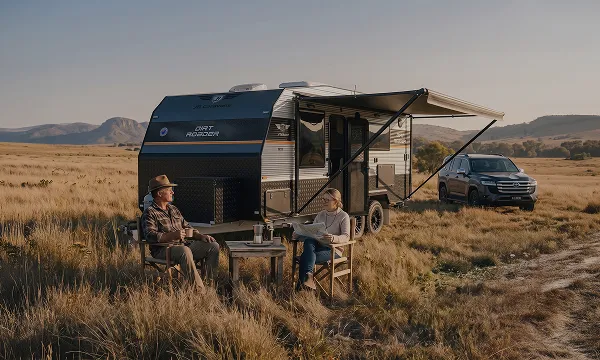
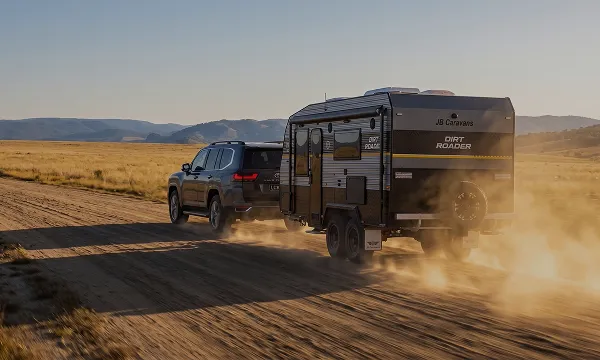
The Dirt Roader runs a BMPro AGM with 200Ah and 200W solar. Built for caravan parks and powered sites with the occasional free camp.
AGM is heavier, less efficient at deep cycling, and slower to recharge than lithium. It also costs less and has been proven for decades. For two nights off-grid maximum, it is the honest answer.
Lithium: what changes when you step up
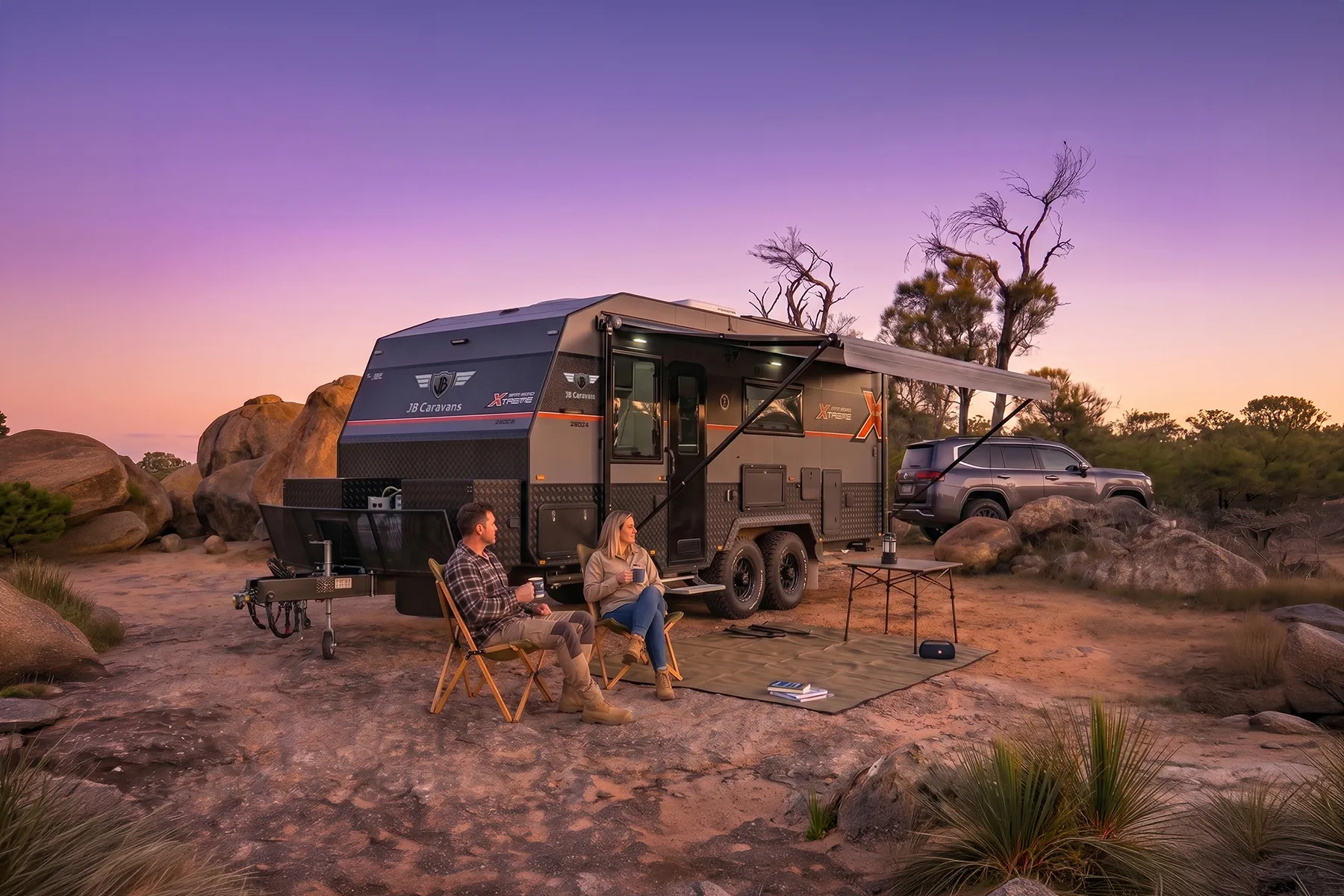
The Dirt Roader Xtreme steps up to an EcoFlow 4kW lithium system. 333Ah, 600W solar input.
Built for three nights off-grid as the norm. Lithium is lighter, deeper cycling, faster to recharge, and lasts roughly three times longer than AGM.
The 10kW system: real remote touring
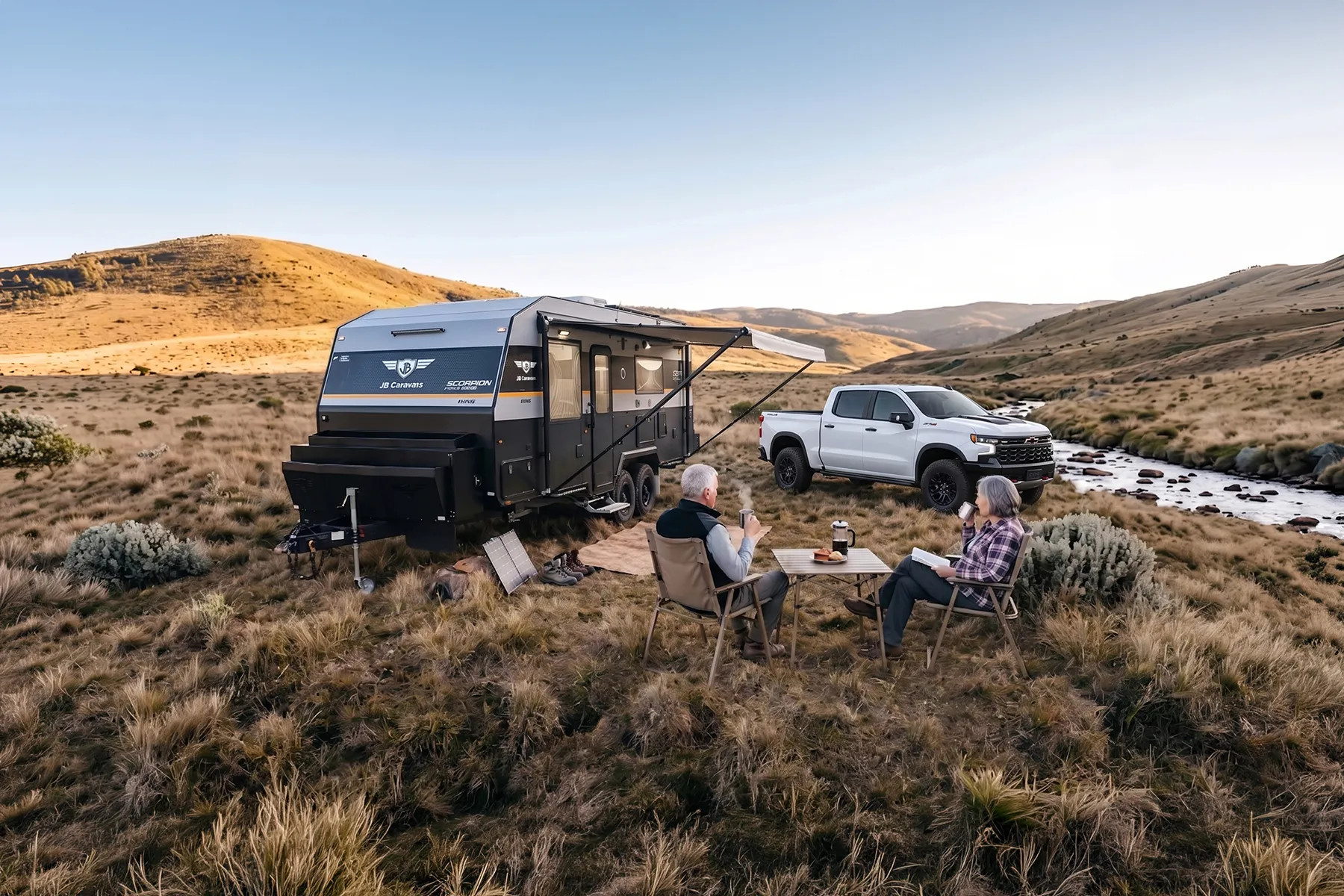
The Sting Air and Gator X EV run EcoFlow 10kW. 833Ah lithium, 1,000W solar, 5,000VA pure sine wave inverter.
Three days off-grid is conservative. Five is realistic with the solar working. Seven is possible if you are careful with the air conditioner.
Solar is the underrated half
A 4kW battery with 200W solar cannot sustain itself off-grid. You discharge faster than you recharge.
A 4kW battery with 600W solar holds its own indefinitely in good light. Match your panels to your battery. That is why the DRX runs 600W and the Sting runs 800W.
The summary in one line each
Two nights: AGM. The Dirt Roader does this from $98,000.
Three to four nights: 4kW lithium. The DRX does this from $119,750.
Five-plus nights: 10kW lithium. The Sting Air does this from $172,500.