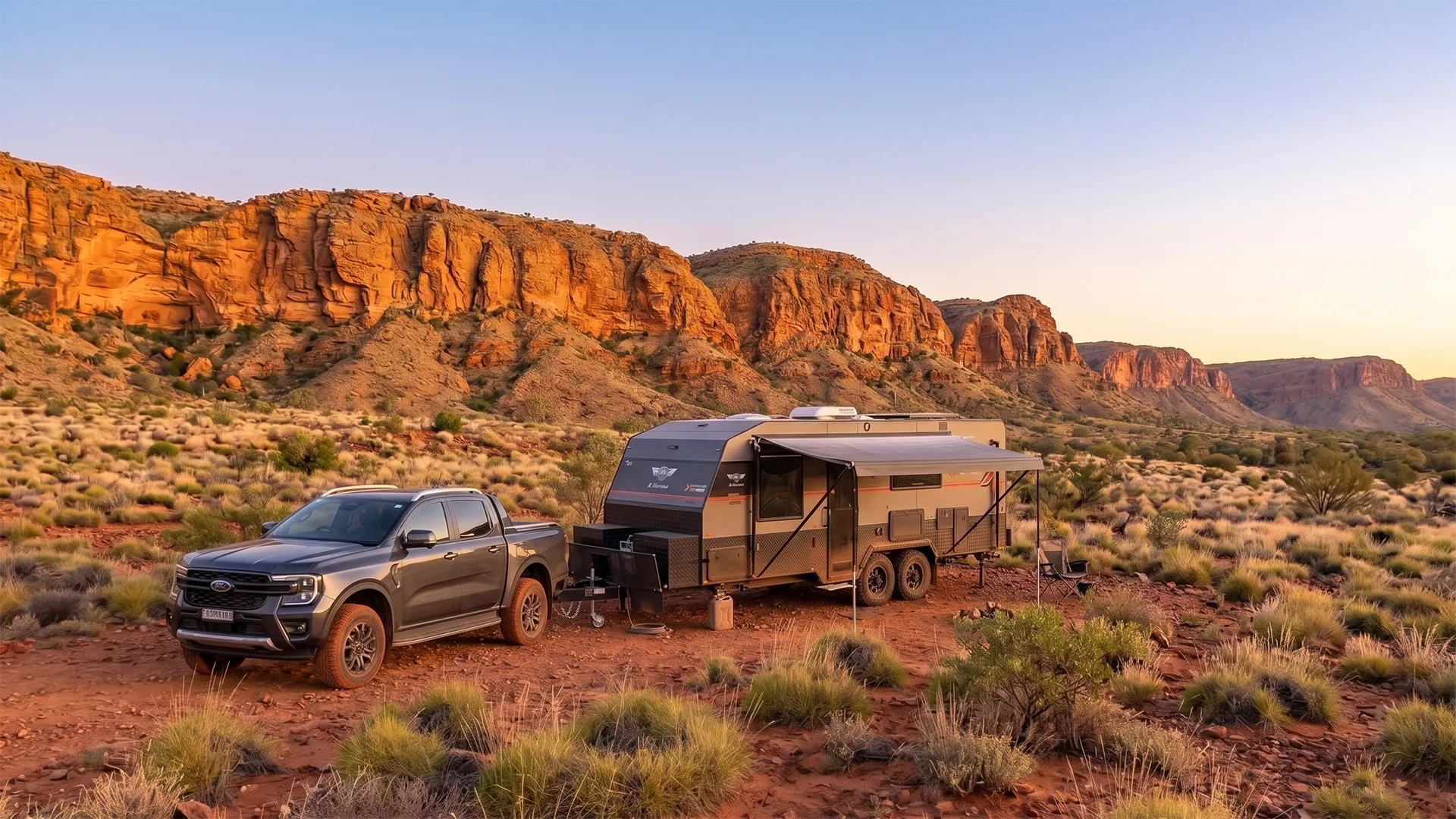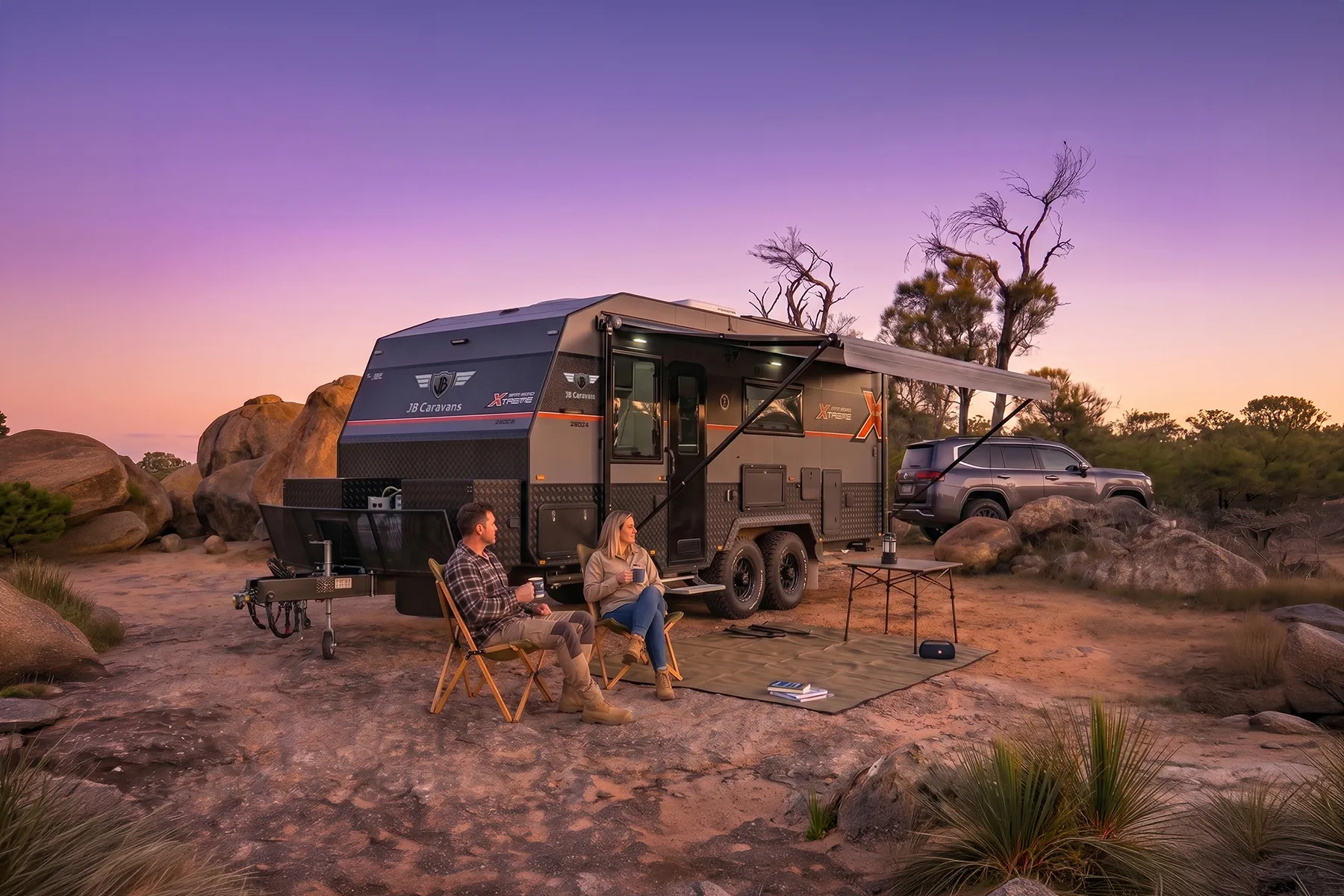
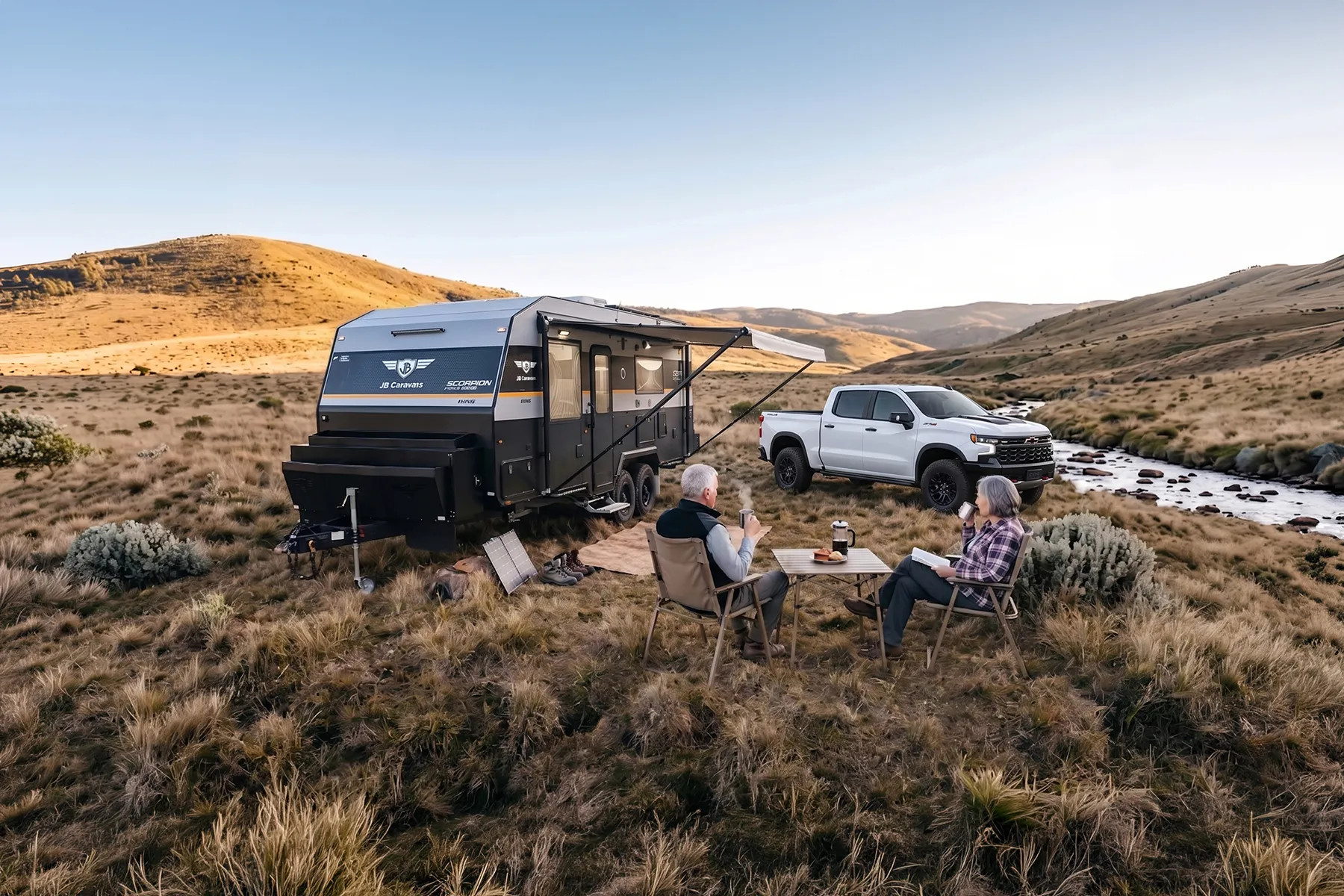
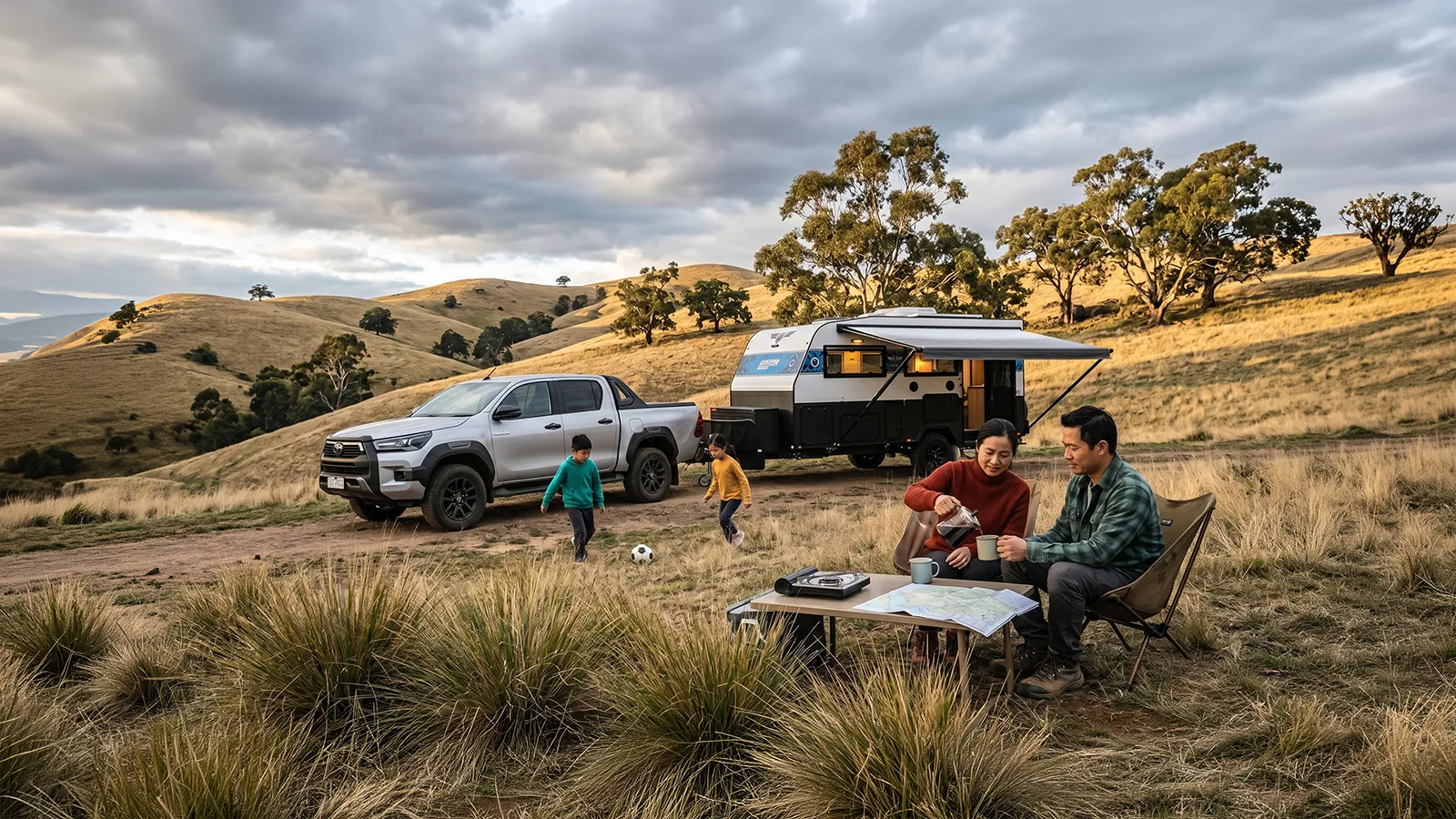
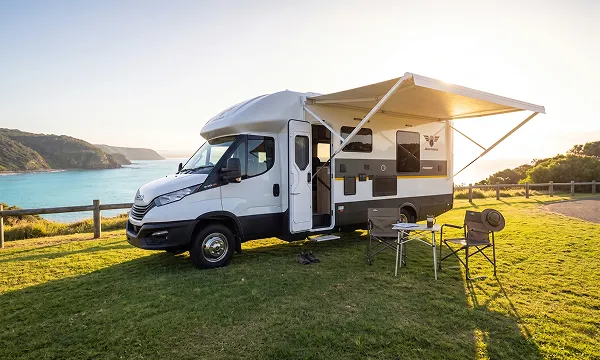
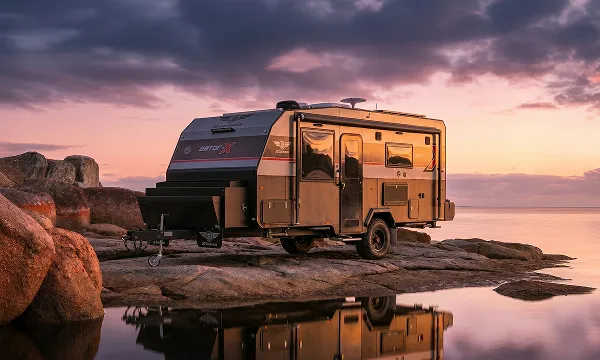
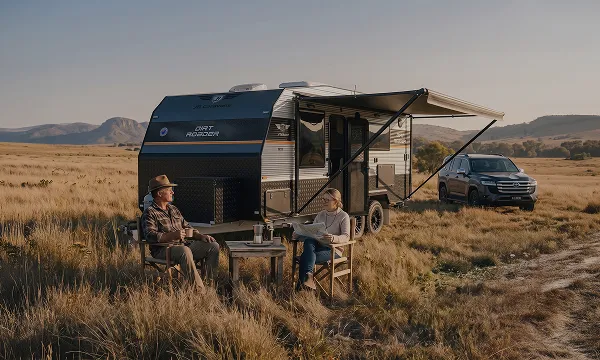
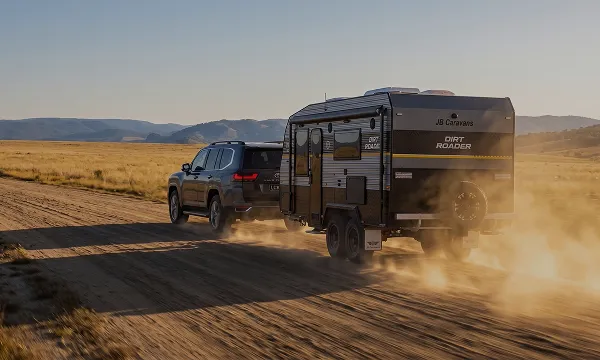
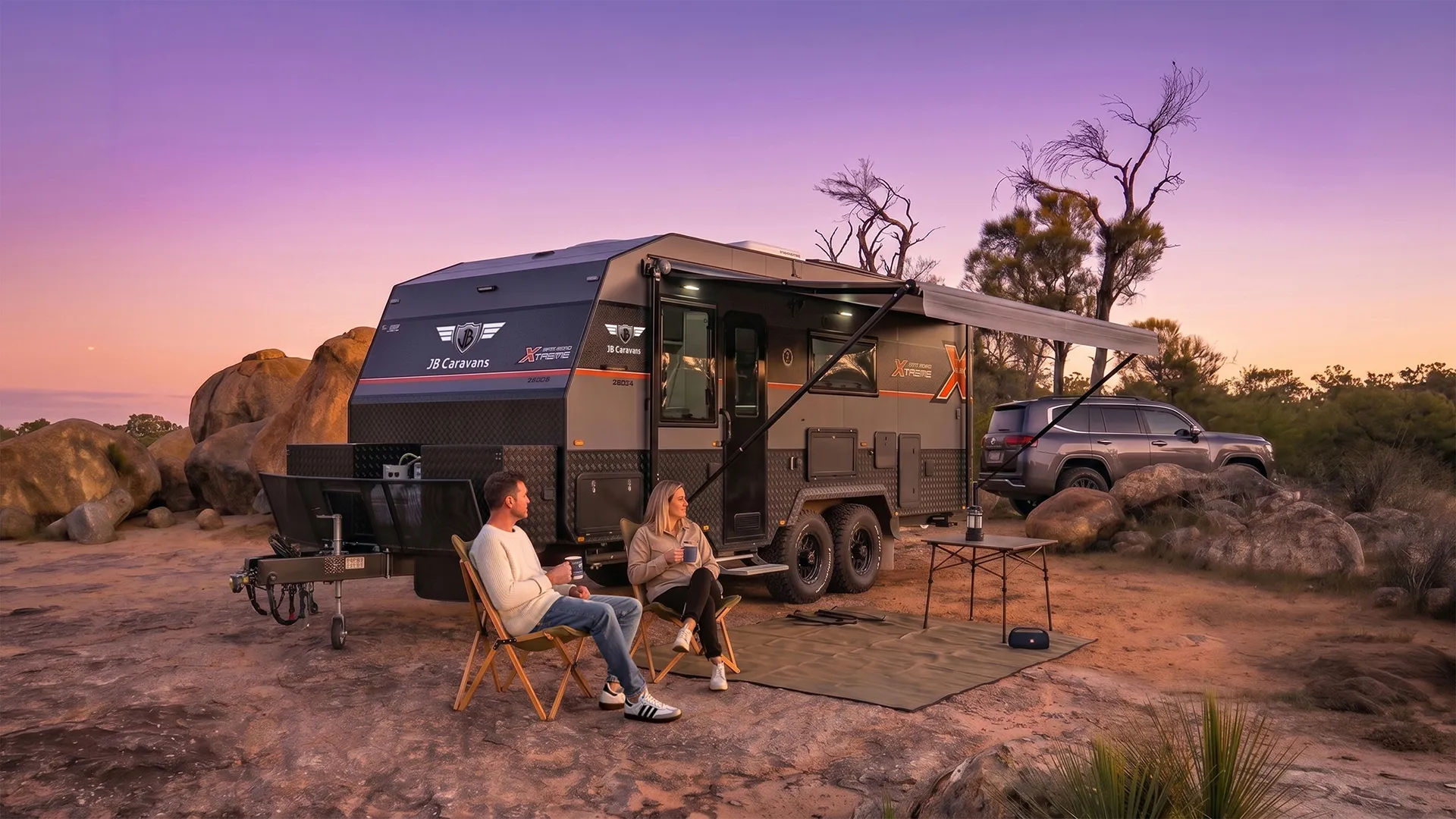

If you are buying your first off-road caravan and you keep hearing the term "semi off-road" without anyone explaining what it actually means, you are in the right place. This guide covers what semi off-road caravans are built for, where they can go, and how to choose between the two JB models that lead the category in Australia.
What is a semi off-road caravan?
A semi off-road caravan is built for graded dirt roads, station stays, and formed bush tracks. It has higher ground clearance, tougher suspension, and a stronger chassis than an on-road caravan, but it is not rated for sustained creek crossings, deep corrugations, or remote tracks days from a dealer. Most Australian touring sits inside semi off-road territory.
The category sits between on-road and full off-road. On-road caravans are built for sealed highways and caravan parks. Full off-road caravans are built for genuinely remote travel where dealer support is days away. Semi off-road covers the broad middle, which is where most Australian trips actually happen.
What separates a semi off-road caravan from an on-road one is the engineering. Off-road rated suspension. Higher A-frame with a stone deflector. All-terrain tyres. A chassis built for the punishment of unsealed roads rather than the smooth predictability of bitumen.
The two semi off-road caravans in the JB range
JB Caravans builds two semi off-road models. The Dirt Roader is the entry point from $98,500 driveaway with 17 layouts. The Dirt Road Xtreme is the bigger, more capable sibling from $120,250 with 32 layouts, upgraded suspension, and a lithium power system.
Both models share the same DNA. Australian made in Campbellfield, semi off-road rated, available across the national dealer network. The full semi off-road range sits on one category page. The differences sit in the suspension, the power system, the cladding, and the breadth of layouts.
Dirt Roader (from $98,500)
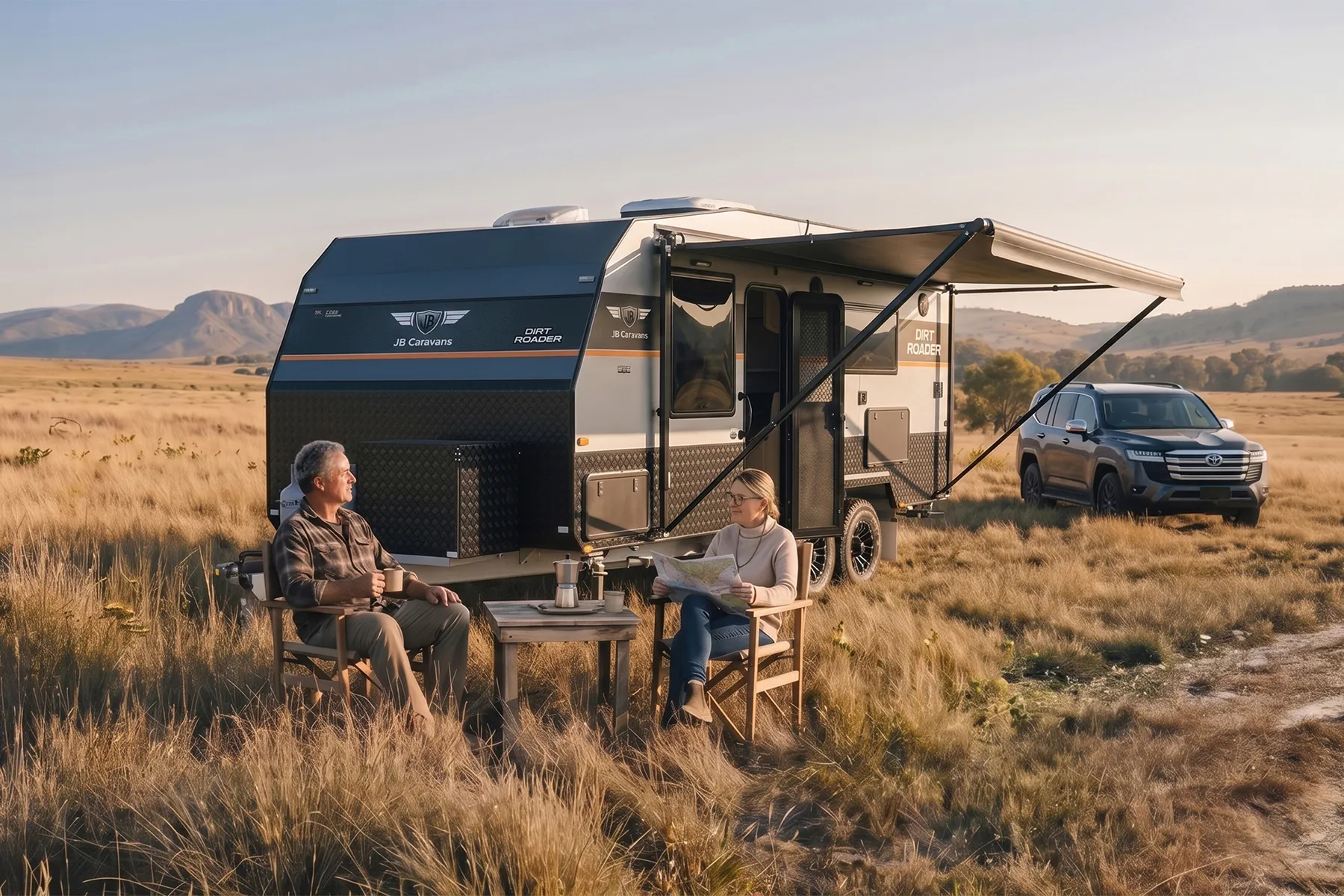
The Dirt Roader is JB's entry into the off-road range. It is built for graded roads, national park access, and station stays. Seventeen layouts, Cruisemaster CRS2 suspension, 220L water capacity, BMPro AGM battery with 200W solar. From $98,500 driveaway.
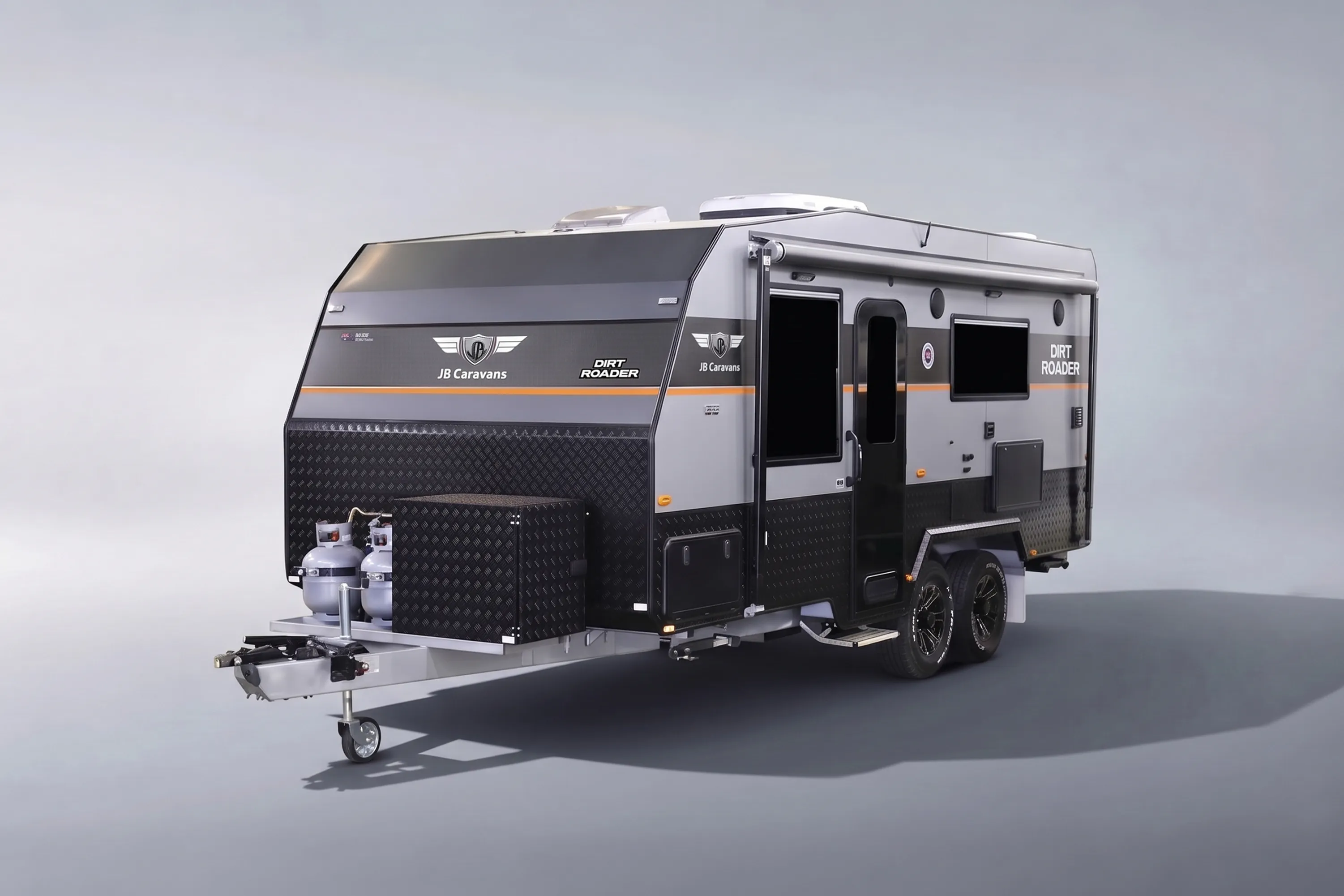
Ten years in production and still the same answer for buyers who want off-road capability without paying for capability they will not use. The Dirt Roader handles the Flinders Ranges, the Stuart Highway side roads, and the easy end of the Gibb River Road comfortably.
Power runs through a BMPro AGM battery with 200W of solar. That setup is built for caravan parks with the occasional free camp, two nights off-grid as the realistic ceiling. If your trip plan is mostly powered sites, that is the right system. Step up to lithium only when your free camping pattern justifies it.
Layouts cover the full range you would expect. Café for couples, club lounge for cool weather travel, family bunks in B2 and B3 configurations, large ensuites for long trips. The complete list of Dirt Roader layouts with current pricing and specs sits on the model page.
Dirt Road Xtreme (from $120,250)
The Dirt Road Xtreme is the bigger Dirt Roader. Thirty-two layouts including East-West Bed and Drop-Down Bed options, Alko Enduro 3.7T suspension rated 40% higher than the standard Dirt Roader, and an EcoFlow 4kW lithium system with 600W of solar. From $120,250 driveaway.
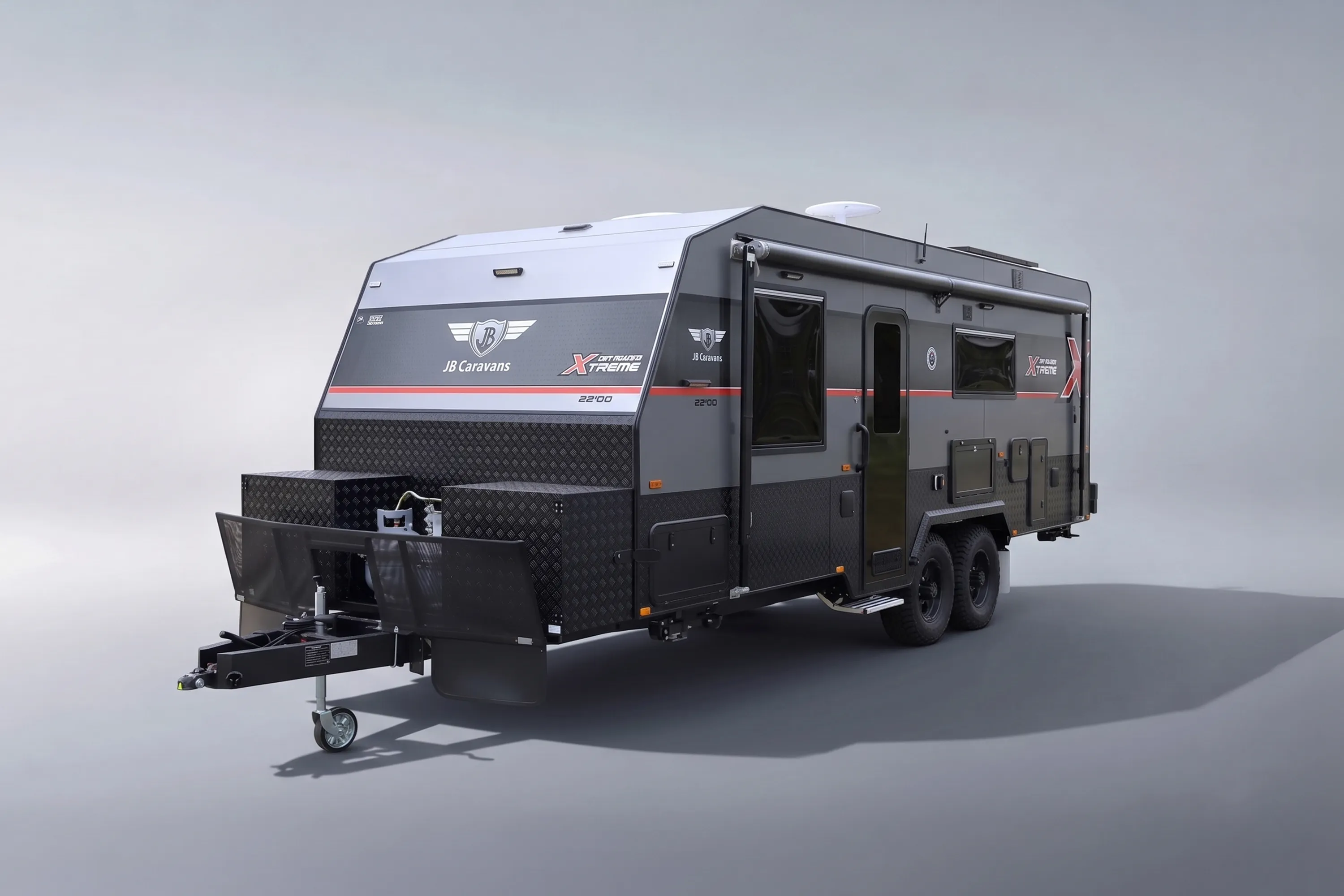
Where the Dirt Roader ends, the Dirt Road Xtreme begins. The Alko Enduro 3.7T suspension is the upgrade that most semi off-road buyers wish they had bought first. It handles sustained corrugations that would tire out the standard CRS2.
The EcoFlow 4kW lithium system with 600W of solar shifts the off-grid ceiling from two nights to three or four. That is the difference between national park hopping and proper bush camping. Lithium also recharges faster, lasts longer, and weighs less than the AGM equivalent.
Alucomp external cladding replaces the stucco walls of the Dirt Roader. It is stronger, lighter, and more thermally efficient. Combined with the 32 layouts, the full Dirt Road Xtreme range covers configurations the Dirt Roader does not, including East-West Bed for couples who want to climb out without disturbing each other.
How to choose between the Dirt Roader and Dirt Road Xtreme
Choose the Dirt Roader if your trips are powered sites with occasional free camping and your tow vehicle is a mid-size 4WD. Choose the Dirt Road Xtreme if you want three or more nights off-grid as the norm, you need a layout the standard Dirt Roader does not offer, or you tow with a 200 Series or heavier.
Four questions get most buyers to the right answer.
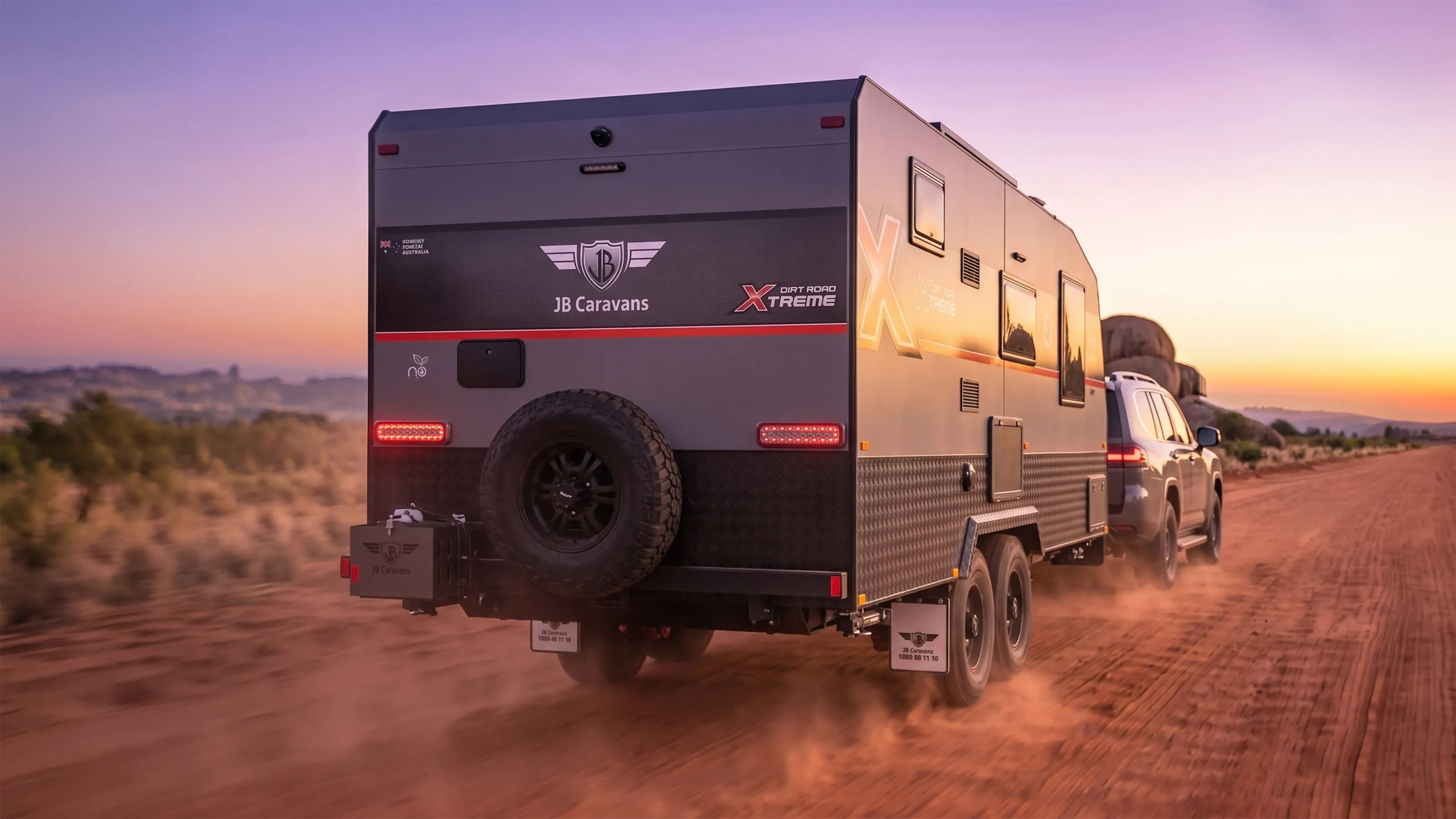
The first is your trip pattern. If you free camp more than 20 nights per year, the Xtreme's lithium system pays for itself in flexibility. If you mostly stay at powered sites, the Dirt Roader's AGM setup is genuinely sufficient.
The second is your tow vehicle. Both models tow behind mid-size 4WDs, but the Xtreme's 3,500kg ATM ceiling suits the 200 Series, 300 Series, Patrol, and Ram. The Dirt Roader at 3,300kg ATM works comfortably with most mid-size 4WDs.
The third is your layout preference. The standard Dirt Roader has 17 layouts. The Xtreme has 32, including East-West Bed and Drop-Down Bed configurations. If a specific layout matters to you, check that the Dirt Roader offers it before choosing the lower price point.
The fourth, money being equal, is the question that tells you what you actually want. Most buyers who can afford the Xtreme and choose the Dirt Roader regret it within two years. Most buyers who genuinely cannot afford the Xtreme are well served by the Dirt Roader. Honest answer.
Where can a semi off-road caravan go?
Semi off-road caravans handle graded dirt roads, formed bush tracks, station roads, and the easy end of remote routes. That covers around 90% of Australian touring, including the Flinders Ranges, the Victorian High Country, Cape Leveque, and properly driven sections of the Gibb River Road.
Specific regions worth knowing about.
Flinders Ranges, South Australia
The Flinders Ranges sit comfortably inside Dirt Roader territory. Graded dirt access to most major destinations, station stays at properties like Rawnsley Park and Wilpena, and easy free camping along the Mawson Trail. No full off-road capability required.
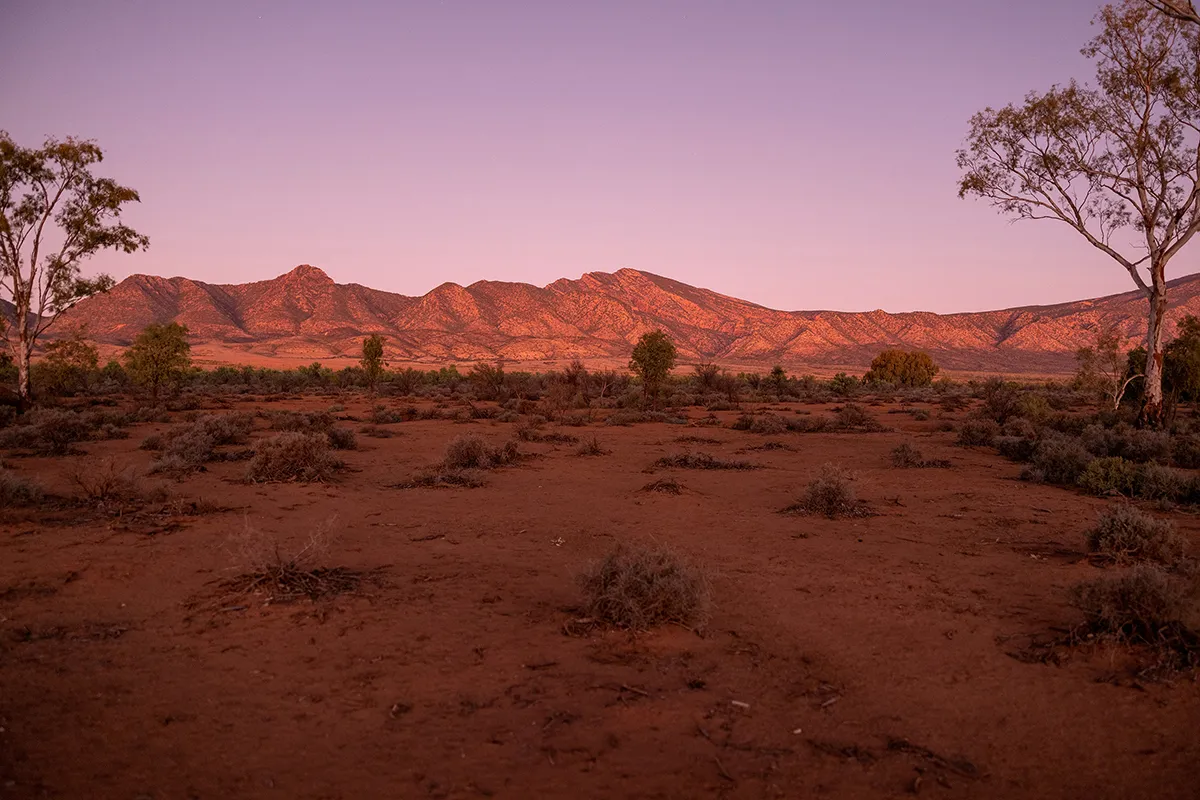
The Flinders is where many semi off-road buyers take their first big trip. Wilpena Pound, Brachina Gorge, Bunyeroo Valley, all reachable on graded dirt or formed track. The roads need attention rather than aggression. Tyre pressures down, speed down, eyes up.
What you do need to plan for is fuel range and water. Towns are sparse. Carry the full 220L water capacity and budget your jerry cans accordingly.
Gibb River Road, Western Australia
The Gibb River Road sits inside Dirt Road Xtreme territory when driven correctly. The standard Dirt Roader can manage it in good conditions with careful driving. Both vans need correct tyre pressures, low speed, and respect for the corrugated sections. The Xtreme's Alko Enduro 3.7T is the right tool for the job.
The Gibb has a reputation that scares some buyers off and creates overconfidence in others. Both responses are wrong. With sensible preparation, the standard Dirt Roader has made the full crossing many times. The Xtreme does it more comfortably.
The real challenge is not the road. It is the gorge access tracks. Bell Gorge, Manning Gorge, Mitchell Falls. Some of these are at or past the boundary of semi off-road capability. Know which side roads to skip with a semi off-road van, and the main Gibb itself is well within range.
Cape Leveque, Western Australia
Cape Leveque is well inside semi off-road capability. The main road is sealed for most of the length, with a short unsealed section before Kooljaman. Both Dirt Roader and Dirt Road Xtreme handle it comfortably. The reward is some of the best beach camping in Australia.
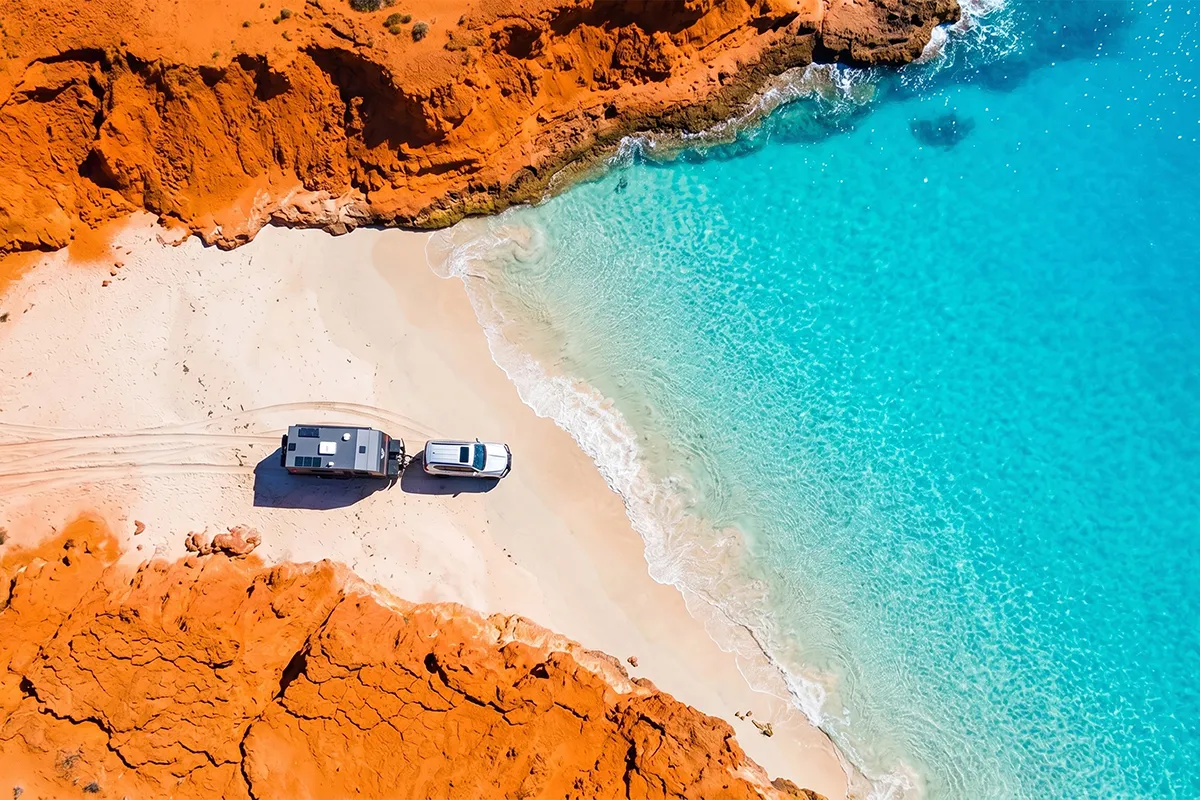
The road improved significantly after the 2020 seal extension. What used to be a serious off-road challenge is now reachable in any semi off-road caravan. Tyre pressures still matter on the unsealed final section, but most of the trip runs on well-maintained surface.
The bigger consideration is heat. Wet season travel is not advised in either van. Dry season, from May to October, is when the trip works.
Victorian High Country
The Victorian High Country is semi off-road country at its best. Formed mountain tracks, station roads, and free camping along the Howqua and Wonnangatta valleys. Both Dirt Roader models handle it. The High Country rewards the diesel heater more than the suspension, given how cold the evenings get.
Mansfield, Jamieson, Dargo. The classic High Country loop runs on a mix of sealed and well-formed dirt. Some of the harder tracks like Wonnangatta proper and Billy Goat Bluff are beyond semi off-road capability, but the main destinations all sit inside it.
What changes in the High Country is the climate. Even in summer, mornings sit in single digits. A diesel heater earns its keep here more than anywhere else in Australia.
When should you step up to a full off-road caravan?
Step up to full off-road when your trip plan includes Cape York, the Canning Stock Route, the upper Kimberley unsupported, or five-plus nights off-grid as the norm. If your trips genuinely sit on the full side, saving on the semi side is a false economy. You will be back at the dealer in two years.
The boundary is not always obvious. A buyer planning the Flinders and the High Country does not need full off-road. A buyer planning Cape York and a month in the Pilbara does. The space between is where most decisions get made.
The honest test is whether you have specific destinations that require full off-road clearance and active-levelling suspension. If you do, name them. If you can name three or more, the maths usually points to full off-road. If you cannot name any, semi off-road is the right answer. For a deeper comparison of the two categories, our guide to semi vs full off-road caravans covers suspension, power, and capability differences in detail.
What suspension do JB semi off-road caravans use?
JB semi off-road caravans use two different Australian-engineered suspension systems. The Dirt Roader runs Cruisemaster CRS2 3.3T, a passive coil-spring trailing arm system. The Dirt Road Xtreme runs Alko Enduro Cross Country 3.7T, rated 40% higher and built for sustained corrugations.
The suspension is the single biggest difference between the two semi off-road models.
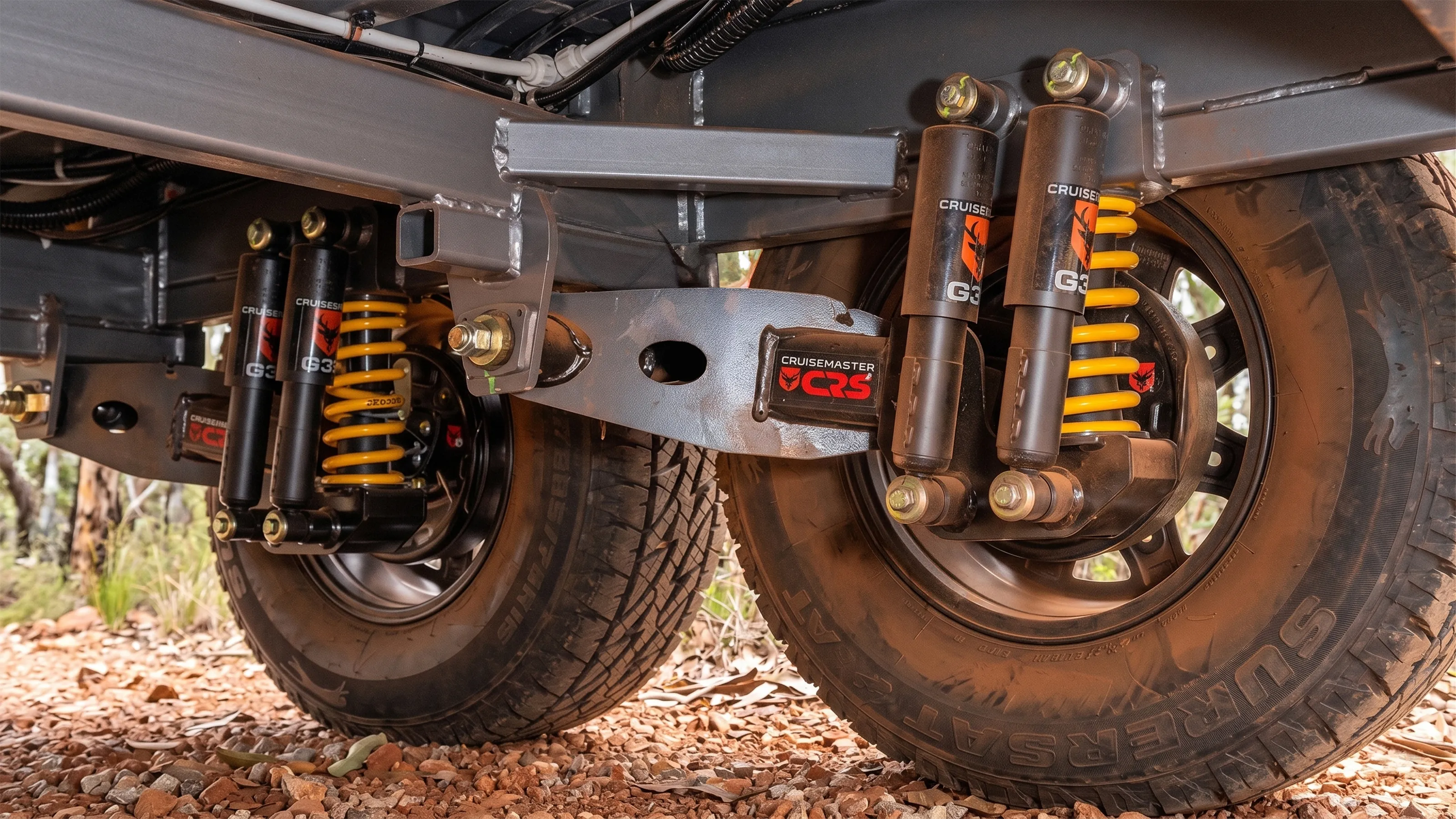
Cruisemaster CRS2: the Dirt Roader's suspension
Cruisemaster CRS2 3.3T is a passive coil-spring trailing arm system, rated to 3,300kg. Independent on each wheel, off-road rated, and proven across more than a decade of JB production. It handles graded roads, station tracks, and the easy end of corrugations without complaint.
The CRS2 is the suspension that built JB's reputation in the off-road category. It is passive, which means no airbags, no electronic levelling, no compressor. That is a feature, not a limitation. Fewer components means fewer failure points, which matters when you are 800km from a dealer.
The system has been refined over generations. Coil springs, twin shock absorbers per wheel, independent trailing arm geometry. On a graded dirt road, it feels almost identical to a sealed road. On sustained corrugations, it will eventually fatigue. That is the boundary that pushes buyers toward the Xtreme.
Alko Enduro 3.7T: the Dirt Road Xtreme's suspension
Alko Enduro Cross Country 3.7T is rated 40% higher than the CRS2, with a heavier-duty coil and shock package designed for sustained corrugations. It also unlocks higher ATM ratings, which suits buyers who tow with 200 Series, 300 Series, Patrol, or Ram tow vehicles.
The Enduro 3.7T is the right tool for buyers who plan to spend extended time on corrugations. The Gibb River Road, the long bush tracks of the Top End, the access roads to remote stations. It does not feel different to the CRS2 in normal conditions, but on the rough stuff, the difference is felt.
It also lifts the ATM ceiling. The Dirt Roader maxes at 3,300kg. The Xtreme sits at 3,500kg. That extra payload matters when you are carrying a full water tank, a loaded fridge, two awnings, and camping gear for six weeks.
What layouts are available in the semi off-road range?
The Dirt Roader offers 17 layouts. The Dirt Road Xtreme offers 32. Both ranges include café, club lounge, family bunk (B2 and B3), large ensuite, and corner shower configurations. The Xtreme adds East-West Bed and Drop-Down Bed options that the standard Dirt Roader does not offer.
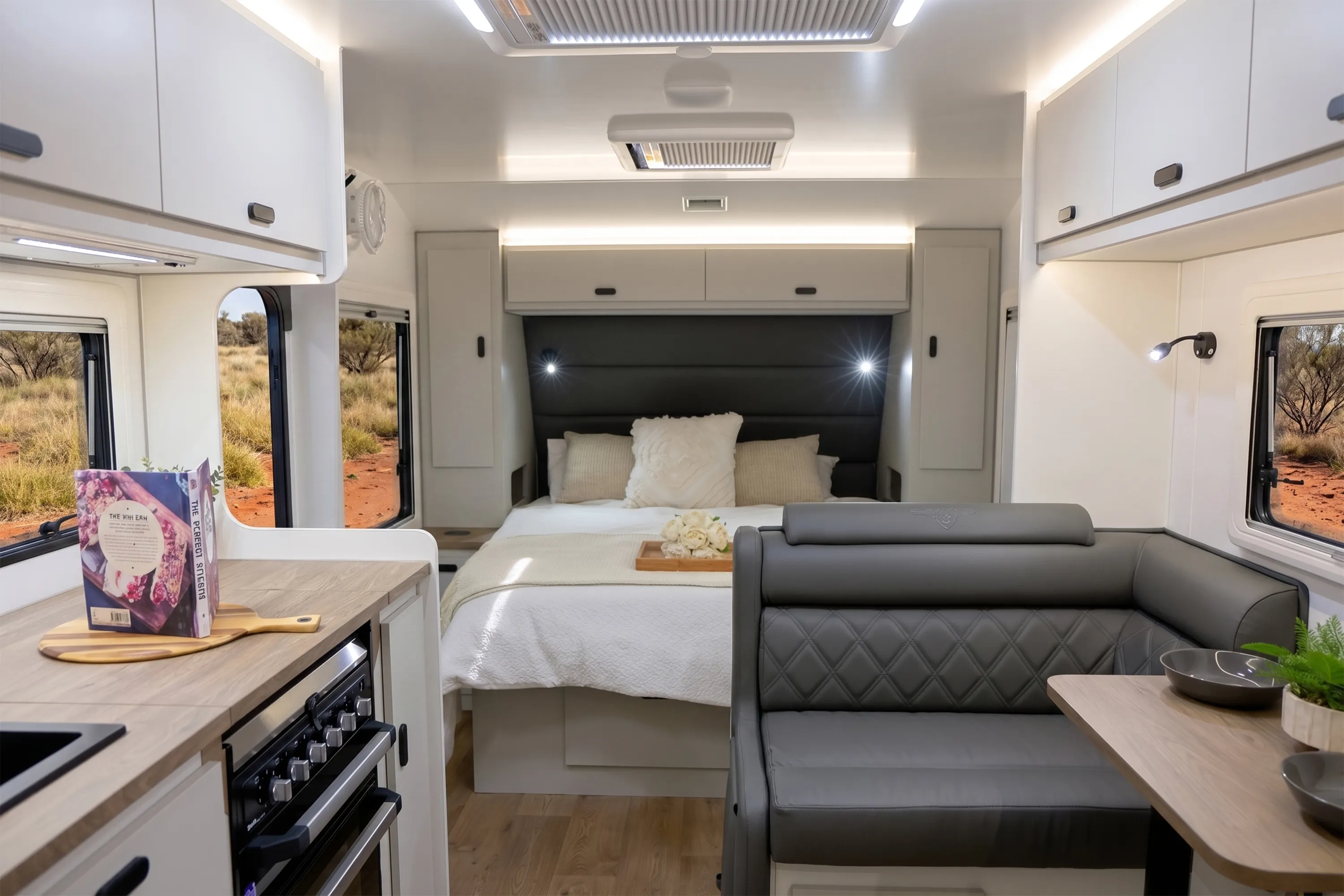
Layout choice matters more than buyers typically realise. The right floor plan is the one that fits how you actually travel, not how you imagine you will travel.
Couples who plan to live mostly outside the van pick café. Couples who plan to spend long evenings inside in cold weather pick club lounge. Families pick bunks sized to the eldest kid, not the youngest.
The 21' Rear Door Club Lounge is the most popular layout in both ranges. It pairs a queen bed forward with a generous U-shape rear lounge that converts to a third sleeping zone.
The 22'6 RD East-West Bed (Xtreme only) puts the queen bed across the width of the van with access on both sides. Couples over 60 consistently rate this as their best layout decision.
Family configurations come in B2 (double bunk) and B3 (triple bunk) variants. The B3 sleeps five comfortably. The B2 sleeps four and gives more storage. For a deeper layout comparison across the whole JB range, our guide to the best caravan layouts covers café, club lounge, centre bathroom, family bunk, and East-West configurations side by side.
What 4WD do I need to tow a semi off-road caravan?
Mid-size 4WDs handle the standard Dirt Roader comfortably. HiLux, Ranger, D-MAX, Fortuner, and Pajero are all sensible matches. The Dirt Road Xtreme at 3,500kg ATM suits the same vehicles but pushes their GVM ceiling once loaded. Heavier tow vehicles like the 200 Series, 300 Series, Patrol, or Ram give more headroom.
Tow rating is not the number that limits you. GVM is. Most mid-size 4WDs hit their GVM ceiling before they hit their tow rating ceiling, because GVM includes the weight of passengers, fuel, accessories, and the caravan's ball weight.
The Dirt Roader at 3,300kg ATM and 245kg ball weight works comfortably behind a HiLux or Ranger with sensible loading. The Xtreme at 3,500kg ATM and 260kg ball weight asks more of the same vehicle. Once you add a bull bar, drawers, a fridge, and four passengers, you can run out of legal GVM headroom. Our tow vehicle and GVM guide breaks down the maths for the most common 4WD options with worked examples.
Can I free camp in a semi off-road caravan?
Yes, both Dirt Roader models support free camping. The standard Dirt Roader handles two nights off-grid on its AGM and 200W solar. The Dirt Road Xtreme handles three to four nights on its EcoFlow 4kW lithium and 600W solar. Both carry 220L of water.
Free camping capability comes down to three things working together. Battery, solar, and water. The Dirt Roader's BMPro AGM is honest, proven, and sized for the trip pattern most owners actually run. Two nights off-grid as the realistic ceiling, with shore power as the norm.
The Xtreme's EcoFlow 4kW lithium with 600W solar shifts that ceiling significantly. Three to four nights off-grid is comfortable. With careful management and good solar conditions, longer stretches are possible. Our battery and power guide covers sizing in detail, including how to match your battery system to your trip plan.
Are JB semi off-road caravans Australian made?
Yes. Both the Dirt Roader and Dirt Road Xtreme are built at the JB Caravans factory in Campbellfield, Victoria. The same team welds the chassis, fits the interiors, tests the systems, and supports owners through the national dealer network.
Australian-made matters more in this category than most. Semi off-road caravans live a harder life than on-road vans. The chassis takes more punishment. The components see more dust and more vibration. Parts availability and dealer support matter when something needs sorting in year three.
JB has been building semi off-road caravans for over a decade. The Dirt Roader is the model that built that reputation. Every JB semi off-road caravan ships with a 5-year structural warranty and access to the national dealer network. Our piece on why Australian-made caravans matter covers resale value, parts availability, and ADR compliance in more depth.
Ready to see the semi off-road range up close?
The full semi off-road lineup with every layout and current pricing sits on one page. Your local JB dealer can walk through both models with you in about thirty minutes.
Browse the semi off-road range Find your nearest dealer