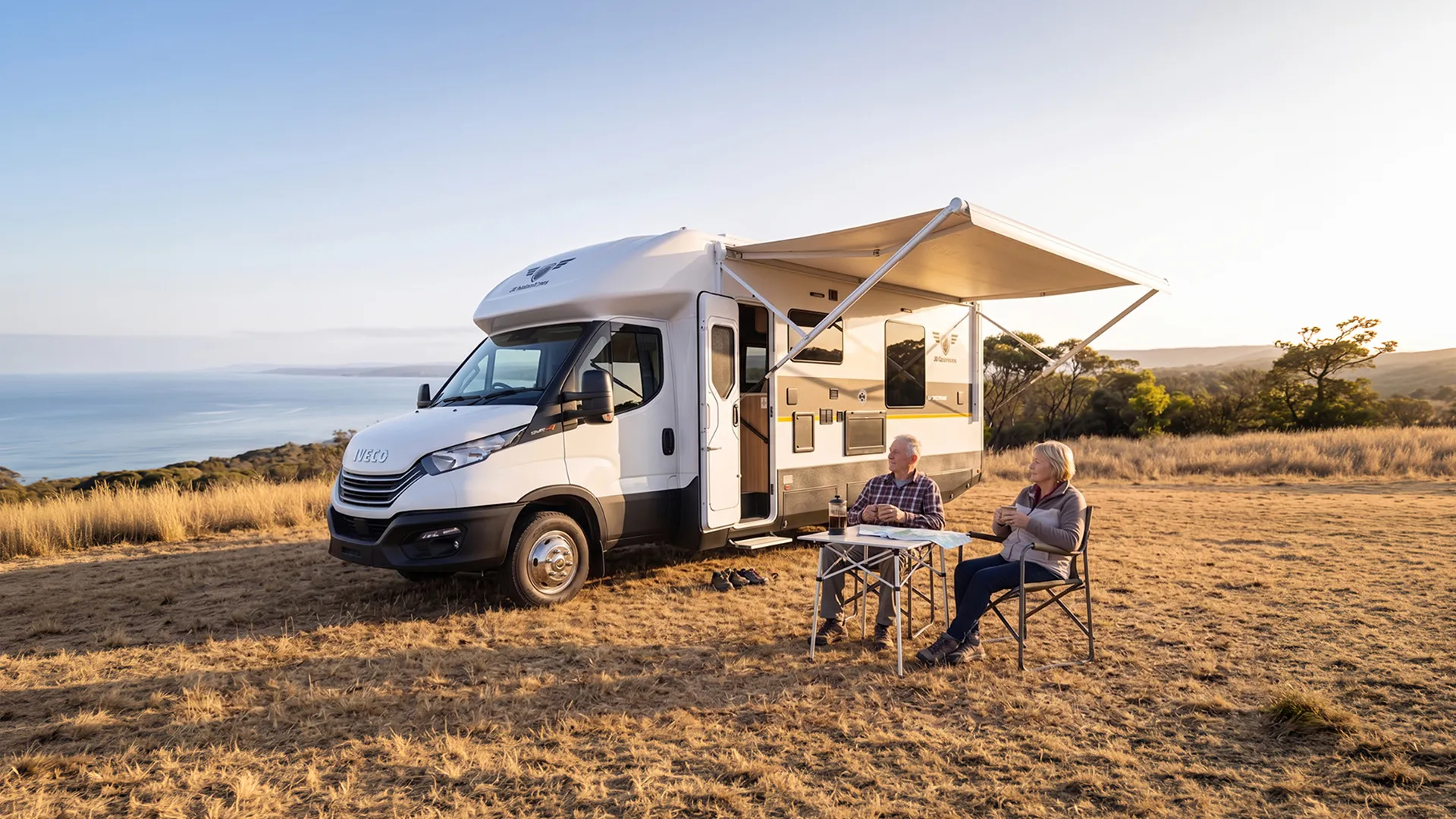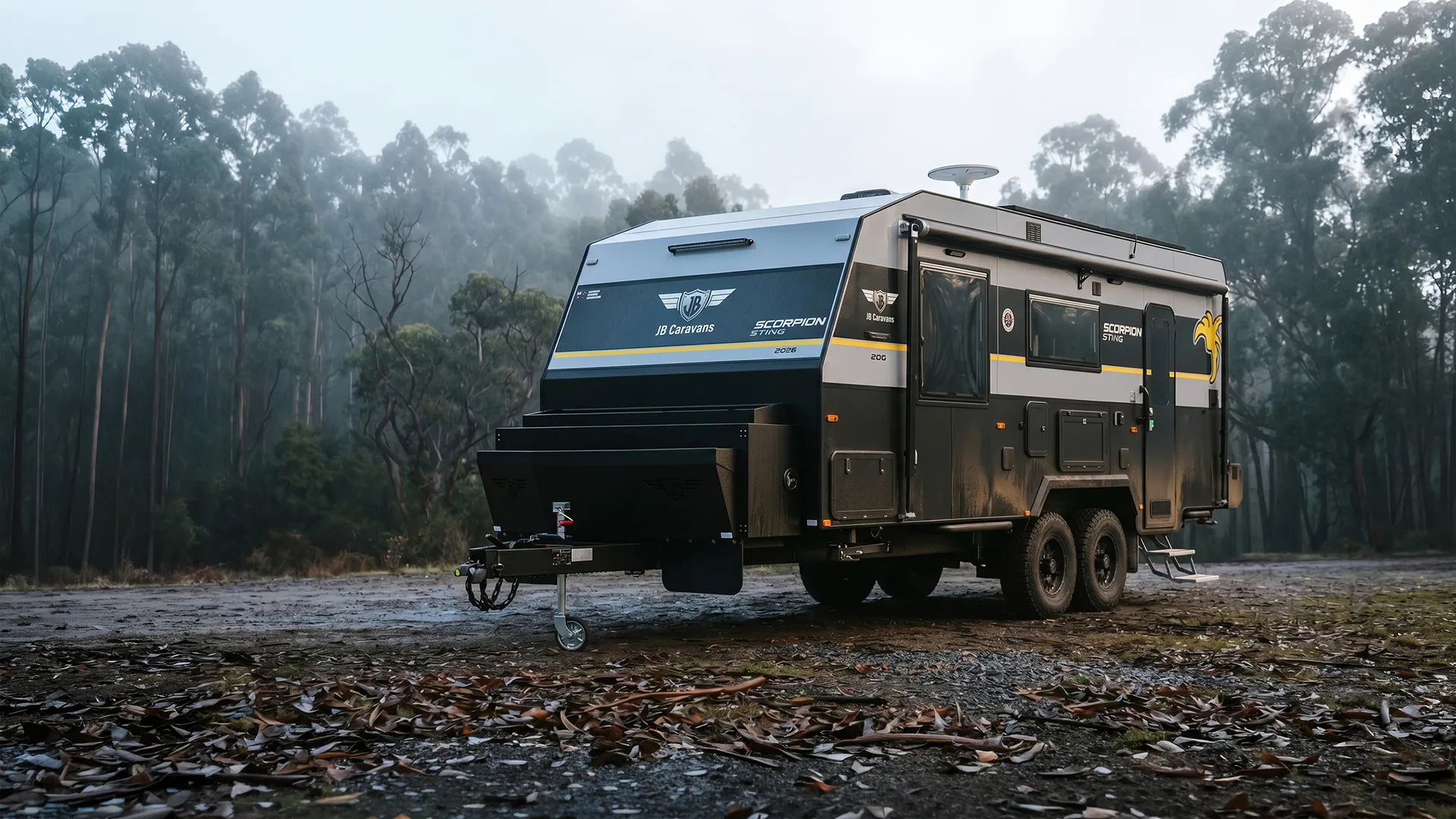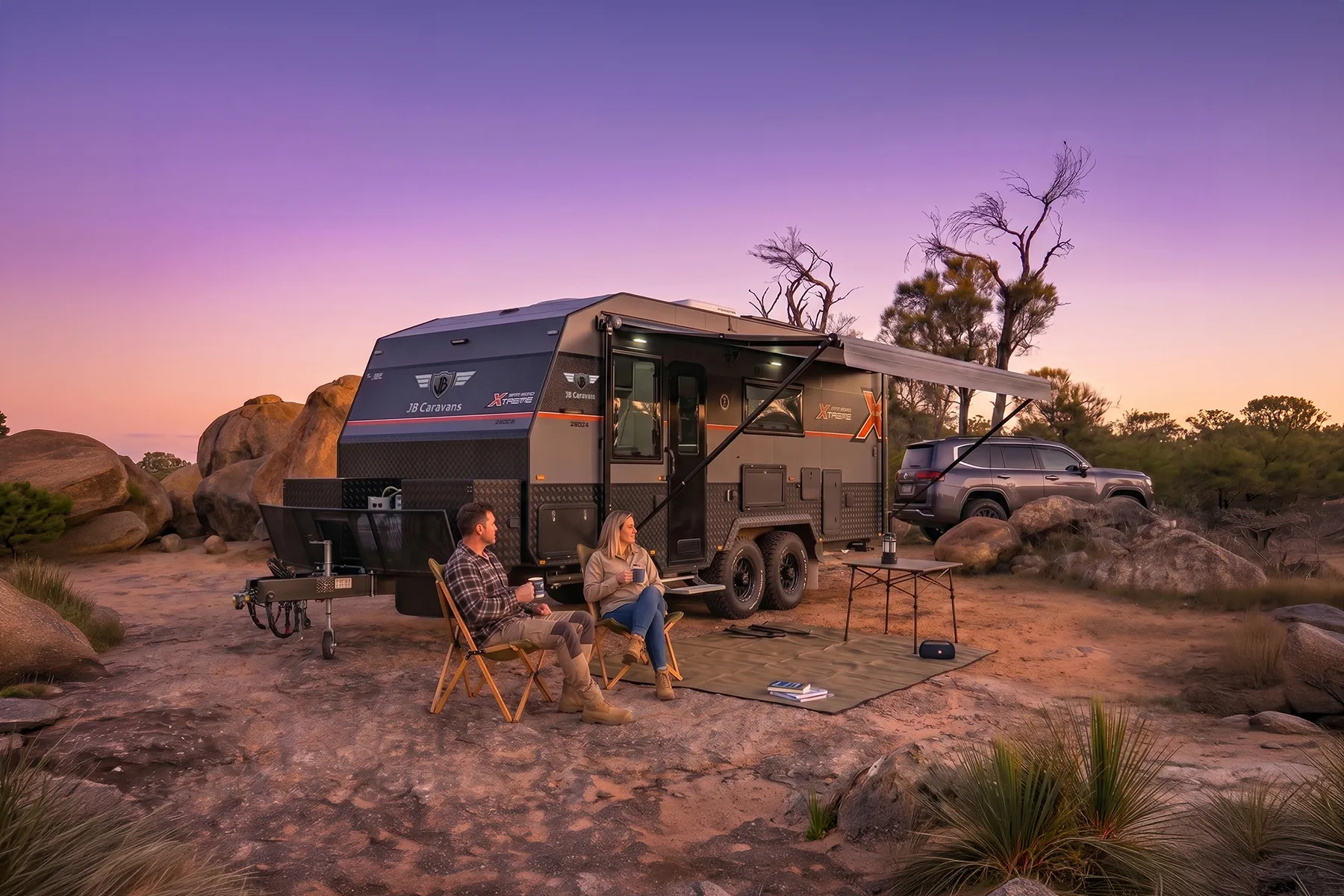
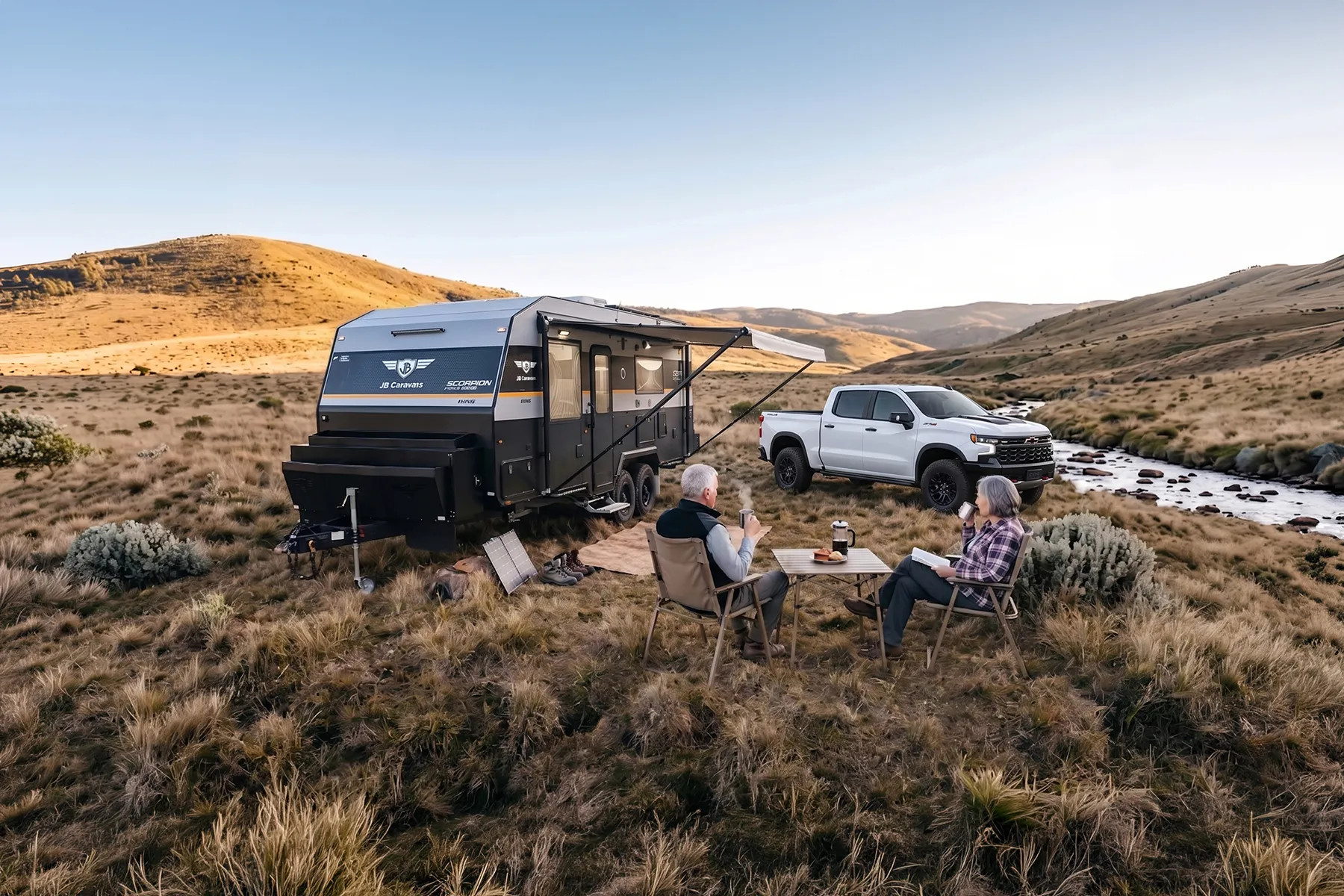
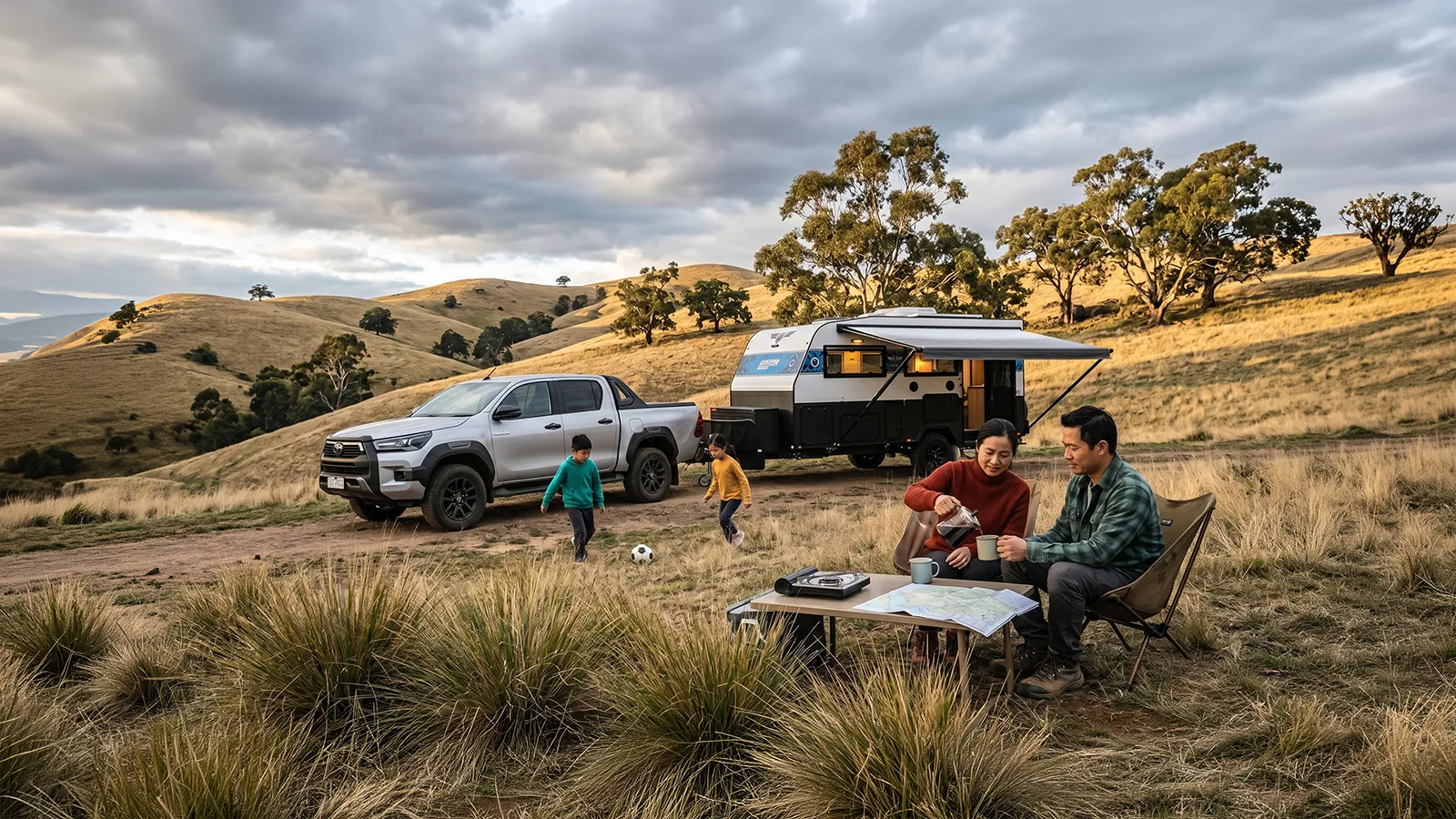
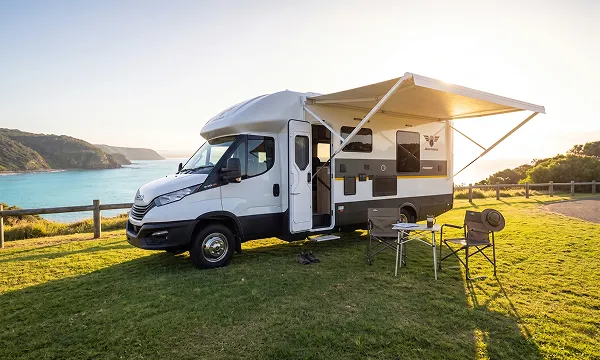
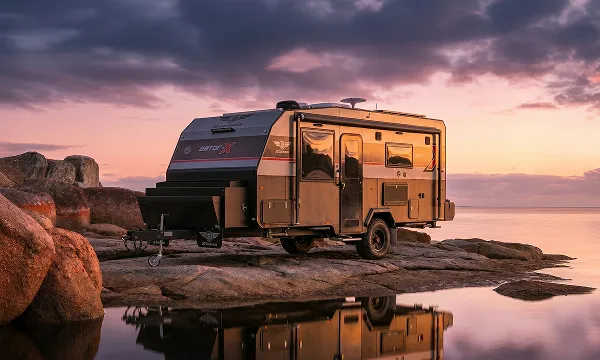
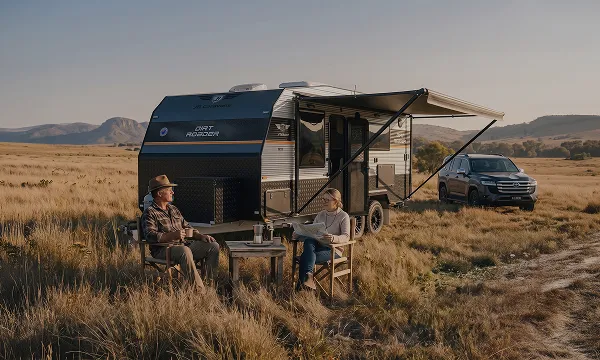
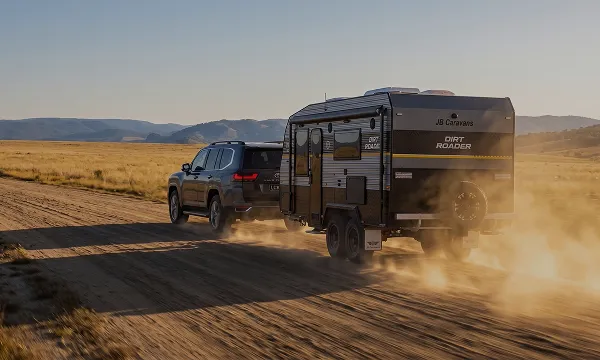
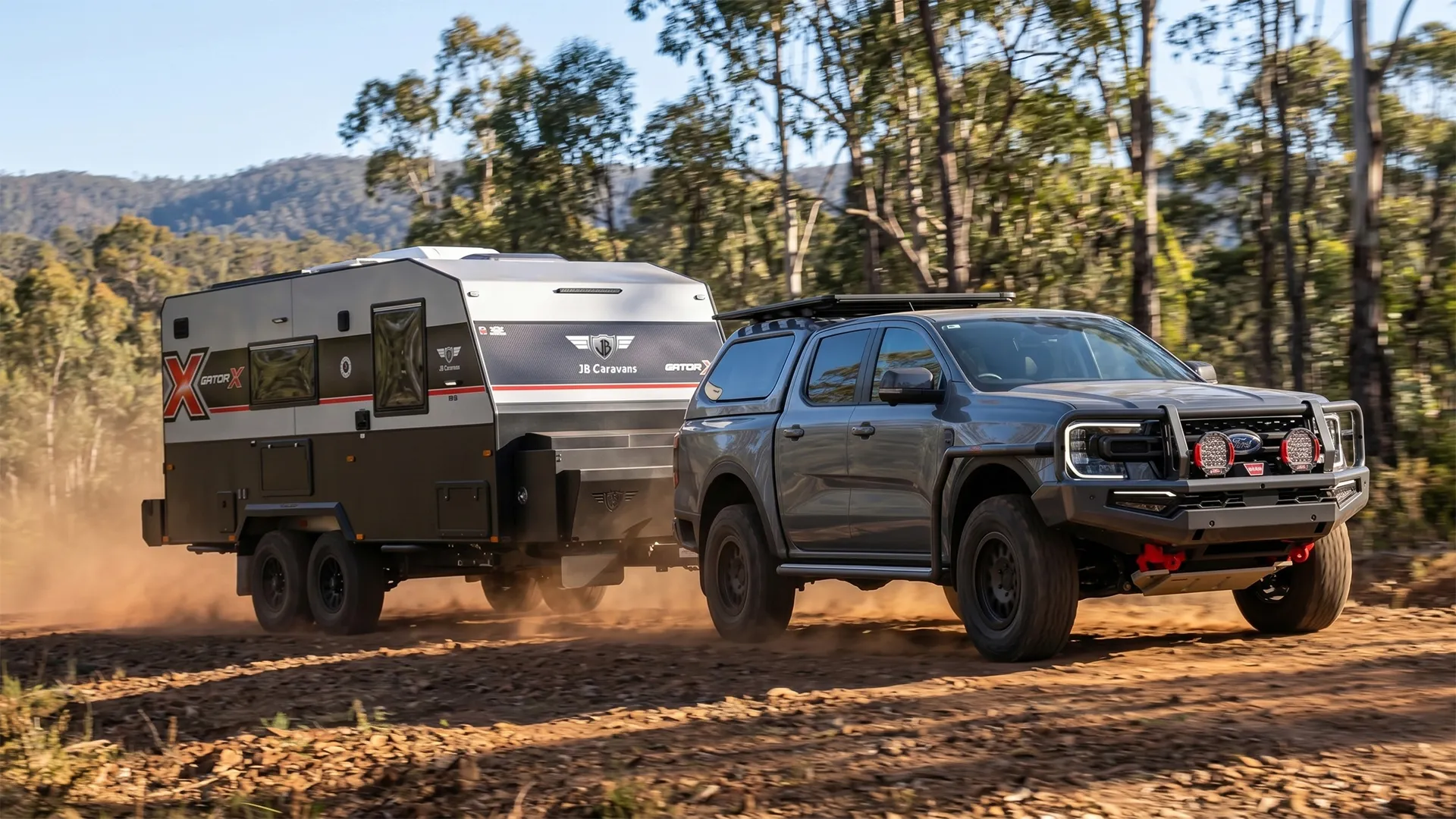

The Gator range is JB's answer to a specific buyer problem: full off-road capability without a heavy-duty tow vehicle. Four variants across two families, all built to be towed by mid-size 4WDs. This guide covers what each Gator is built for, how to choose between them, and why the Gator X is the most interesting model in the JB range.
What is a compact off-road caravan?
A compact off-road caravan is a full off-road capable van built light enough to be towed by a mid-size 4WD. It is full off-road in suspension, chassis, water capacity, and off-grid power, but compact enough in length and weight to sit comfortably behind a HiLux, Ranger, or D-MAX. Compact in size, not capability.
Most full off-road caravans are built for 4,500kg tow vehicles. The Silverado, F150, the Ram. Buyers who own a HiLux or Ranger either have to upgrade their tow vehicle or accept semi off-road capability instead.
Compact off-road sits between those two answers. Full off-road suspension, full off-road chassis, full off-road power systems, in a body weight that mid-size 4WDs can tow without GVM gymnastics. The Gator range exists for exactly this buyer.
The Gator range, explained
The Gator range covers two families. The Gator Hybrid (14ft and 16ft, single-axle, slideout kitchen) is the lightweight end at 2,800kg ATM. The Gator X (16ft to 18.5ft, single or tandem axle, full caravan format) runs from 3,000kg to 3,500kg ATM. Both families share the same brief: full off-road capability behind a mid-size 4WD.
Each family answers a different version of the compact question. The full Gator lineup with current pricing sits on the JB full off-road range page, but the model-by-model differences are worth walking through.
Gator Hybrid 14 (from $118,100)
The Gator Hybrid 14 is the most compact full off-road van in the JB range. 14ft, single axle, 2,800kg ATM, Cruisemaster XT 2.8T suspension, EcoFlow 2kWh lithium with up to 600W of solar, Dometic slideout kitchen. One layout, built for two.
The 14 is built for the buyer who wants to tow with anything and go anywhere. Couples, solo travellers, weekenders, and the occasional bigger trip. At 1,900kg tare, it sits well below the legal towing limit of every mid-size 4WD on the market.
The hybrid format keeps most of the kitchen and cooking external, with a Dometic slideout that deploys when parked. Inside is a queen bed, a small lounge, and a wet ensuite. Compact, fast to set up, and easy to live in for shorter trips.
The 2kWh EcoFlow lithium system runs the fridge, lighting, water pumps, and phone charging for two to three nights off-grid. Solar tops up the rest. Built for short and medium trips with the occasional remote stretch.
For the full Hybrid 14 specification and pricing, browse the Gator Hybrid 14 model page.
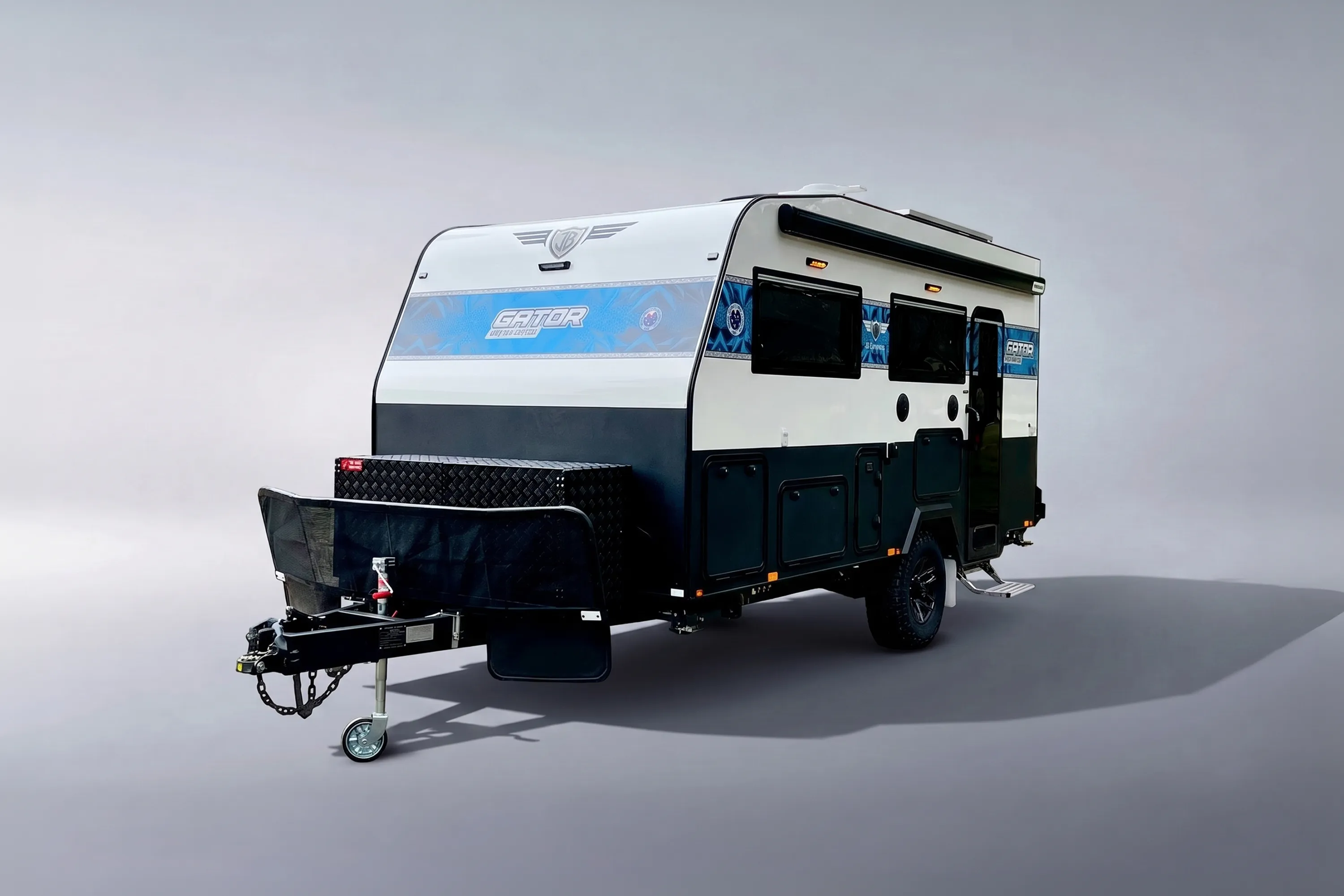
Gator Hybrid 16 (from $123,100)
The Gator Hybrid 16 is the same chassis, suspension, and power system as the Hybrid 14, with two extra feet of internal living space. 16ft, single axle, 2,800kg ATM, café layout. The Hybrid format with more room to live in it.
The 16 is for buyers who want the hybrid experience with more interior space. The towing weight is the same. The suspension is the same. The power system is the same. What changes is what is inside the van.
The café layout replaces the straight lounge of the 14 with a proper dinette and queen bed configuration. For couples who travel longer or who like to spend more time inside the van, the extra two feet matters.
The same 2kWh EcoFlow lithium system. The same up to 600W of solar. The same single-axle Cruisemaster XT 2.8T. The 16 is the Hybrid 14 with a more livable interior, at a $5,000 premium.
For the full Hybrid 16 specification and pricing, browse the Gator Hybrid 16 model page.
Gator X (from $129,600)
The Gator X is the most interesting model in the JB full off-road range. It runs the same Cruisemaster ATX Airbag BCS active-levelling suspension as the flagship Scorpion Sting Air, in a 16ft to 18.5ft body that a HiLux can tow. EcoFlow 5kW lithium, 800W of solar, 11 layouts.
This is the model that breaks the rule. Active-levelling suspension is usually the preserve of 4,500kg vans behind 200 Series LandCruisers. The Gator X puts the same suspension in a 3,000kg to 3,500kg body. Mid-size 4WDs can tow it. The maths works.
Eleven layouts. Single axle from 16ft to 17ft 10, tandem axle from 18ft to 18ft 6. Café, L-lounge, club, single beds, large ensuite, family bunks in B2 and B3 configurations. A small family or a couple can find their layout here.
The 5kW EcoFlow lithium system with 800W of solar handles three to four nights off-grid as the norm. The active-levelling suspension changes how the van feels on corrugations. Combined, the Gator X is closer to the Sting Air than to the Hybrid in capability, at a fraction of the weight.
For the full Gator X specification and pricing, browse the Gator X model page.
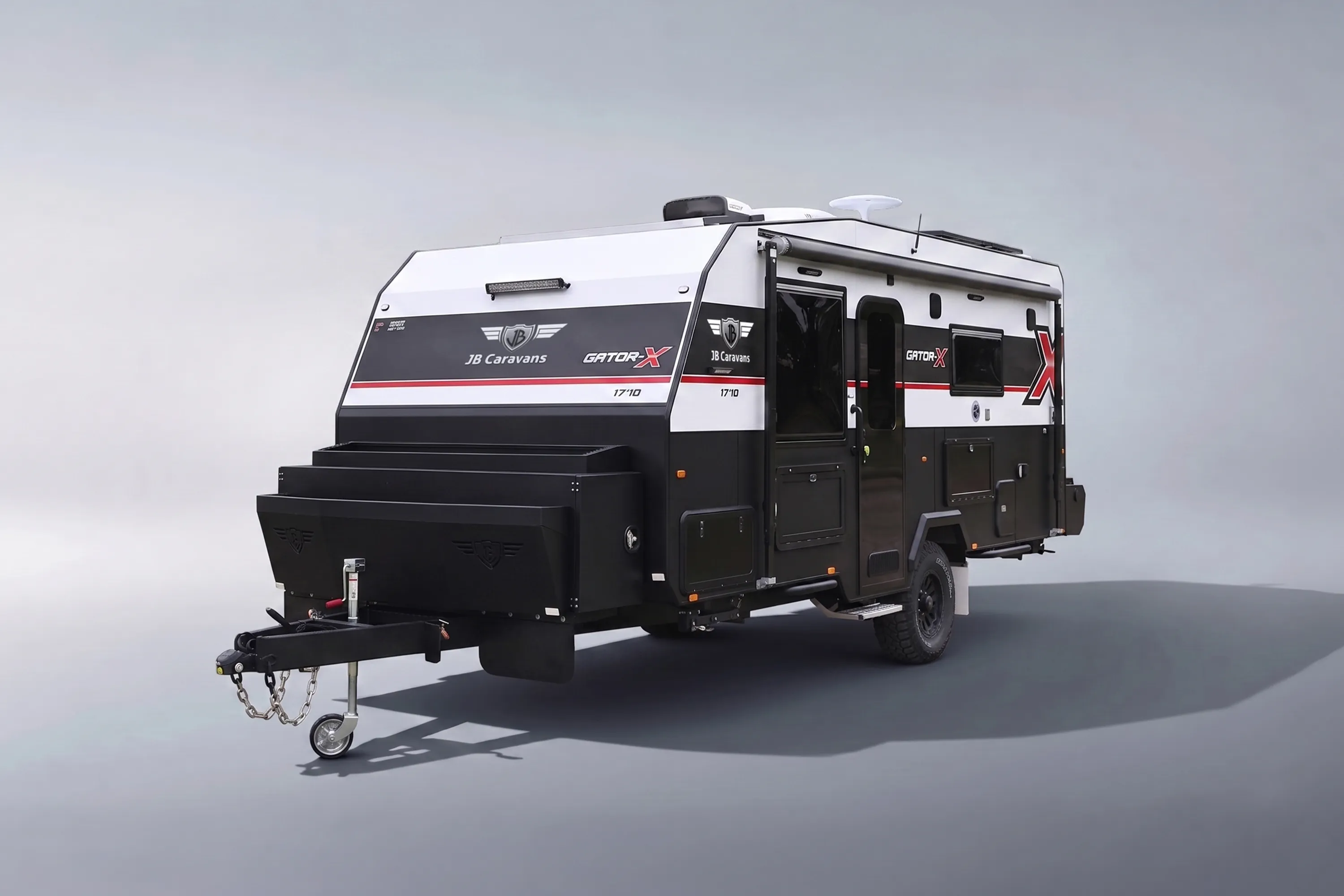
Gator X EV (from $129,600)
The Gator X EV is the gas-free variant of the Gator X. Same chassis, same suspension, same body. But it ships with the Scorpion Sting Air's 10kW EcoFlow lithium system, induction cooking, electric hot water, an electric slideout BBQ, and a BlackJack electric jockey wheel. At the same sticker as the Gator X.
This is the most generous configuration in the JB range relative to price. The 10kW EcoFlow system is the flagship hardware from the Sting Air. The induction cooktop is the Dometic dual-burner used in the Sting Air EV. The electric jockey wheel is the BlackJack used across the EV variants. None of these are upgrades that cost extra.
Buyers who run an EV or hybrid tow vehicle get a caravan designed to charge from regen and remove gas from the equation. Buyers who run a conventional 4WD get the same hardware for free, which is the better way to think about it. The EV variant is the value proposition.
The 10kW system handles five to seven nights off-grid as the norm, the same duration as the Sting Air. The induction cooktop removes the gas bottle compliance routine. The electric jockey wheel removes the physical work of hitching alone.
For the full Gator X EV specification and pricing, browse the Gator X EV model page.
Gator Hybrid vs Gator X: which is right for you?
Choose the Gator Hybrid if you travel as a couple or solo, prefer a hybrid format with external cooking, and want the lightest possible towing weight. Choose the Gator X if you want a full caravan format, more layout options, active-levelling suspension, and the option to add a small family to the trip plan.
Three questions get most buyers to the right model.
The first is travel format. The Hybrid is a hybrid: external slideout kitchen, compact internal living, single sleeping zone. The Gator X is a full caravan: internal kitchen, full lounge or dinette, family layouts available. These are different ways to travel, not better or worse.
The second is family size. The Hybrid sleeps two. The Gator X sleeps up to six in family bunk configurations. If a third sleeping zone is needed (grandkids, friends, a teenager), the Gator X is the only path.
The third is suspension. The Hybrid runs Cruisemaster XT 2.8T, passive single axle, proven and simple. The Gator X runs ATX Airbag BCS, the active-levelling system from the Sting Air. On corrugated tracks, the difference is meaningful. On graded dirt, the difference is barely felt.
What suspension does the Gator range use?
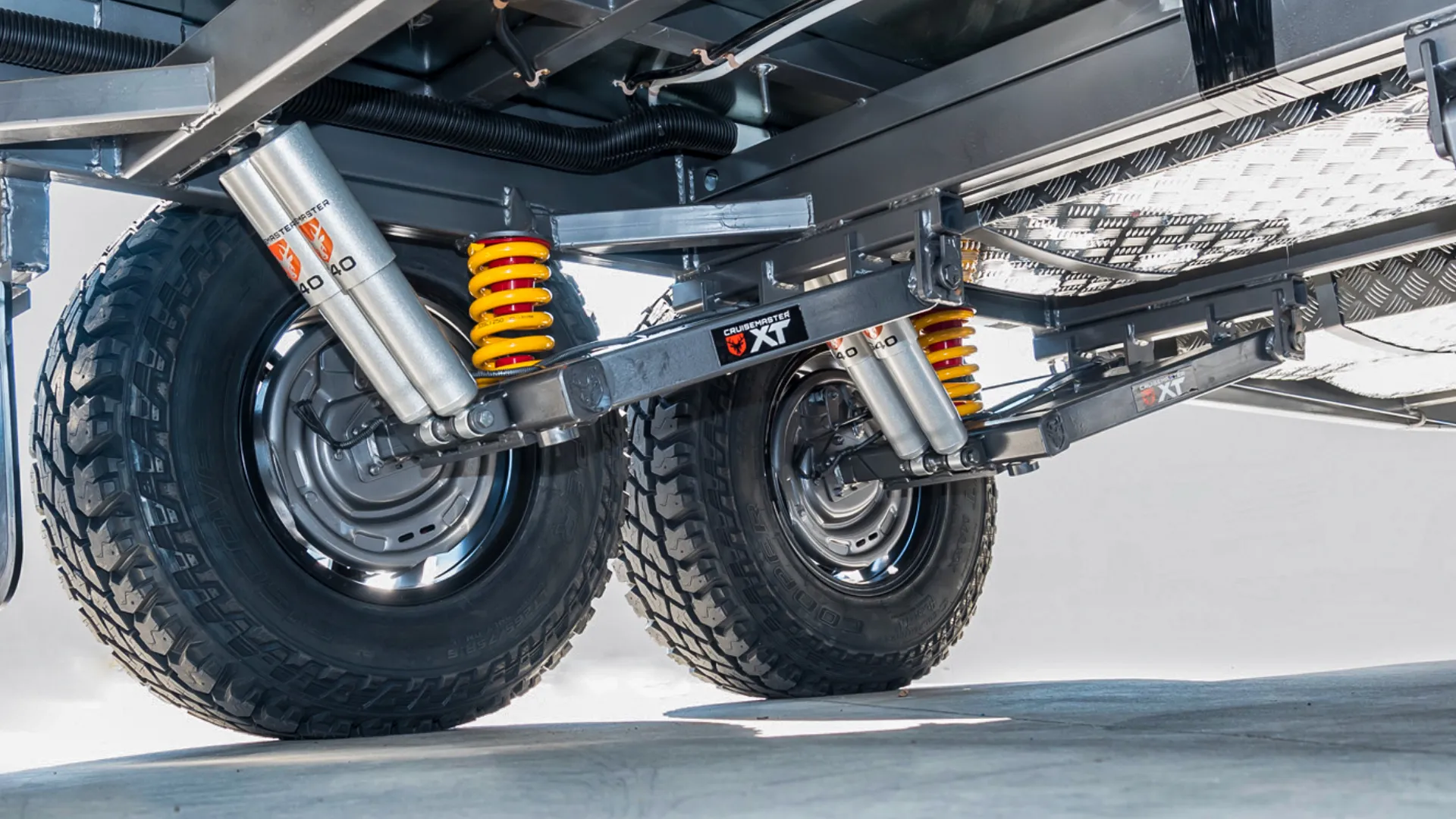
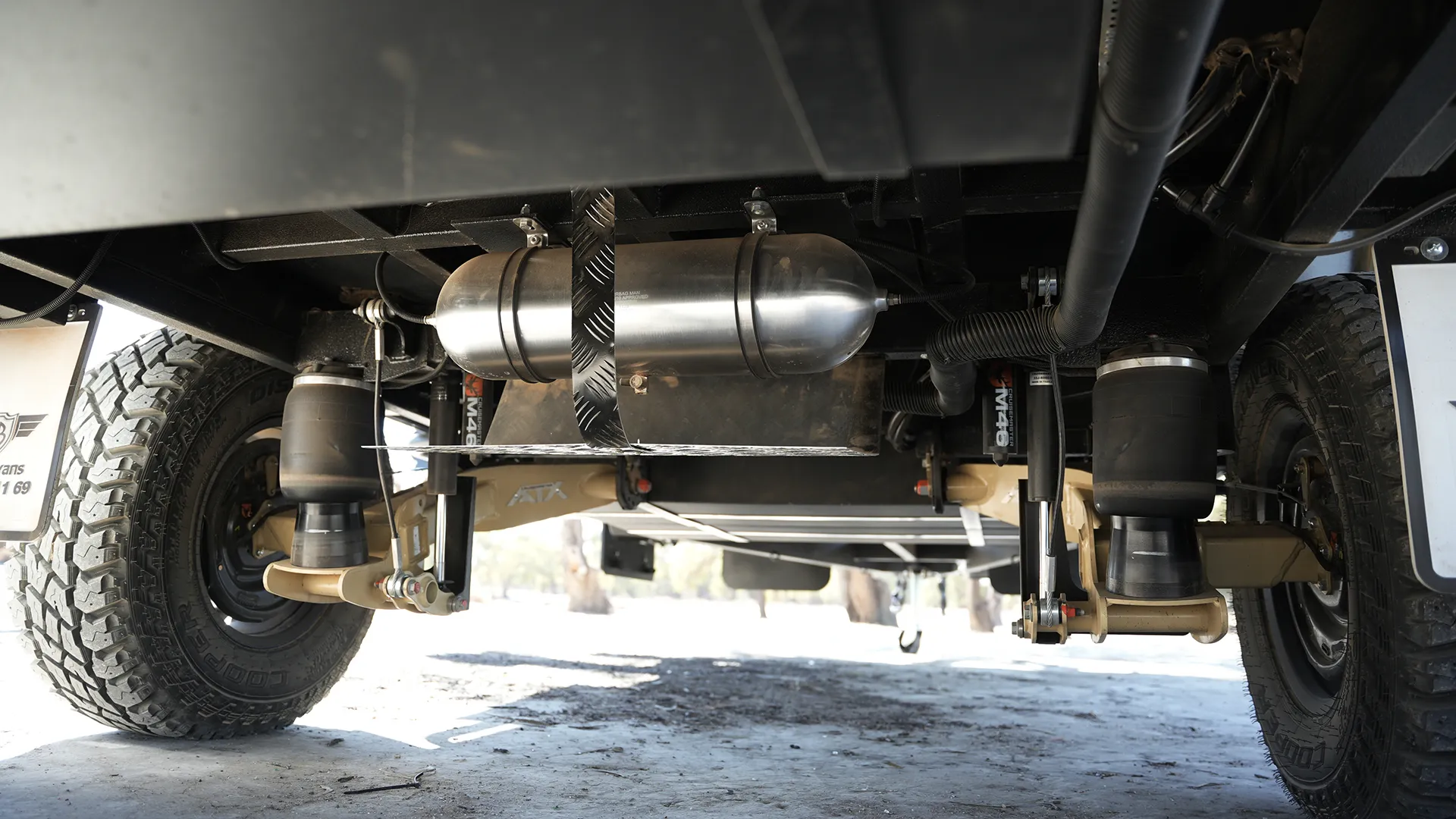
The Gator Hybrid 14 and 16 both run Cruisemaster XT 2.8T, a passive coil-spring single-axle system rated to 2,800kg. The Gator X and Gator X EV both run Cruisemaster ATX Airbag 4.5T BCS, the same active-levelling suspension as the Scorpion Sting Air, rated to 3,500kg.
The Hybrid's XT 2.8T is the right tool for a lightweight, single-axle, hybrid format van. It is proven, simple, and matched to the tow vehicle range the Hybrid was built for. Mid-size 4WDs handle the towing weight comfortably.
The Gator X's ATX Airbag is the genuinely incredible specification in this category. The same airbag and levelling system that costs $173,000 in the Sting Air is standard on the Gator X at $129,600. For the full suspension breakdown across the range, our guide to luxury off-road caravans covers the differences in detail.
What power system does the Gator range use?
The Gator Hybrid runs a 2kWh EcoFlow lithium system with up to 600W of solar. The Gator X runs a 5kW EcoFlow lithium (416Ah) with 800W of solar. The Gator X EV runs a 10kW EcoFlow lithium (833Ah) with 1,000W of solar, matched to the Scorpion Sting Air.
The three systems map to three trip patterns.
The 2kWh Hybrid system handles two to three nights off-grid running a fridge, lighting, and water pumps. Solar tops up the rest. Built for short to medium trips.
The 5kW Gator X system handles three to four nights off-grid as the norm. Lithium recharges faster than AGM, lasts roughly three times longer, and weighs less for the same capacity. Built for couples or families doing two to three week trips with a mix of caravan parks and free camping.
The 10kW Gator X EV system handles five to seven nights off-grid as the norm, the same duration as the Sting Air. The induction cooktop runs from this system. The electric slideout BBQ runs from this system. The system that justifies the EV positioning.
For sizing logic and how to match a battery system to your trip pattern, our caravan battery and power guide covers the maths.
What 4WD do I need to tow a Gator?
All Gator variants are designed to be towed by mid-size 4WDs. The Hybrid 14 and 16 at 2,800kg ATM sit comfortably behind any HiLux, Ranger, D-MAX, or Patrol. The Gator X at 3,000kg to 3,500kg ATM is at the upper end of mid-size capacity. Careful GVM calculation matters.
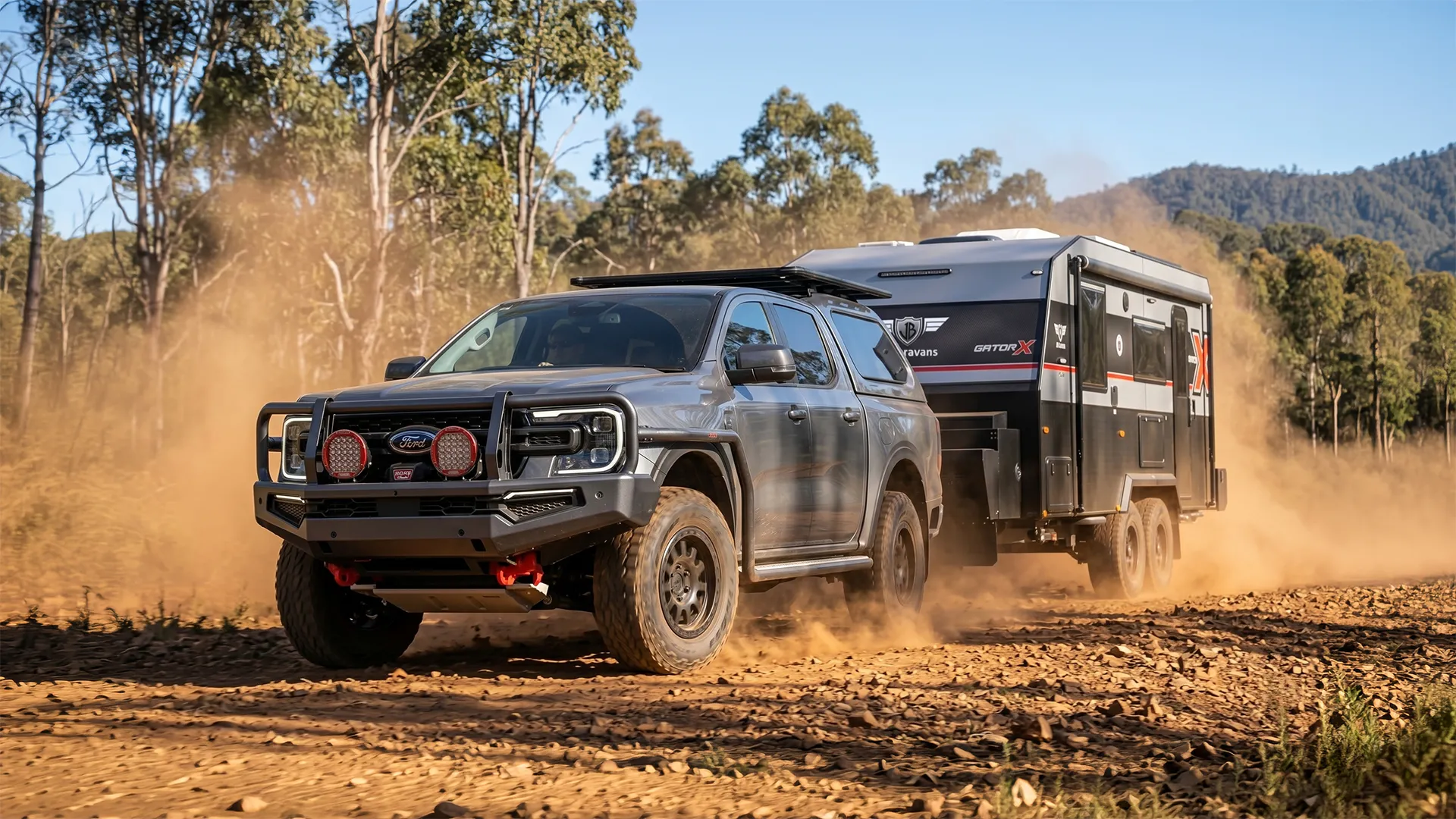
Tow rating is not the number that limits you. GVM is. Most mid-size 4WDs have 3,500kg tow ratings but only 3,050kg to 3,200kg GVMs. The combined weight of vehicle, passengers, fuel, accessories, and ball weight has to sit under that GVM.
A loaded HiLux with a bull bar, drawers, a fridge, and four passengers can carry around 600kg of additional load before GVM limits engage. The Gator X at 280kg ball weight uses around 50% of that headroom immediately. Manageable, but not generous.
The full breakdown of tow rating versus GVM with worked examples for each tow vehicle and each Gator variant sits in our tow vehicle and GVM guide.
Where can you take a Gator?
Anywhere a full off-road caravan can go. Cape York, the Kimberley, the Simpson, the Canning. The compact format actually unlocks tracks that full-size 4,500kg vans cannot access. Narrower turning, lower ball weight, smaller footprint at camp. The advantages of a compact full off-road caravan are not just about the tow vehicle.

On the Gibb River Road, the Gator X handles the full crossing comfortably. On Cape York, both the Hybrid and the Gator X manage the bypass route with appropriate preparation. The Gator X EV's 10kW system unlocks the deeper Cape and the longer Kimberley trips.
Where the compact format earns its keep is the side tracks. Bell Gorge access. The Mitchell Plateau approaches. The narrow station roads that lead to the best free camps. A 23ft Sting Air can drive these tracks, but a Gator does it without thinking about clearance, turning radius, or whether the next pinch point will be a problem.
Beach approaches are the other place compact wins. Lower ball weight on soft sand means less recovery work. Smaller footprint at camp means more flexibility about where to park. The compact format is a feature, not a compromise.
Layouts in the Gator X range
The Gator X and Gator X EV each offer 11 layouts. Single axle from 16ft to 17ft 10, tandem axle from 18ft to 18ft 6. Café for couples, L-lounge and club for cool weather travel, single beds for couples who prefer separate sleeping, large ensuite for long trips, and family bunks in B2 and B3 configurations for families.
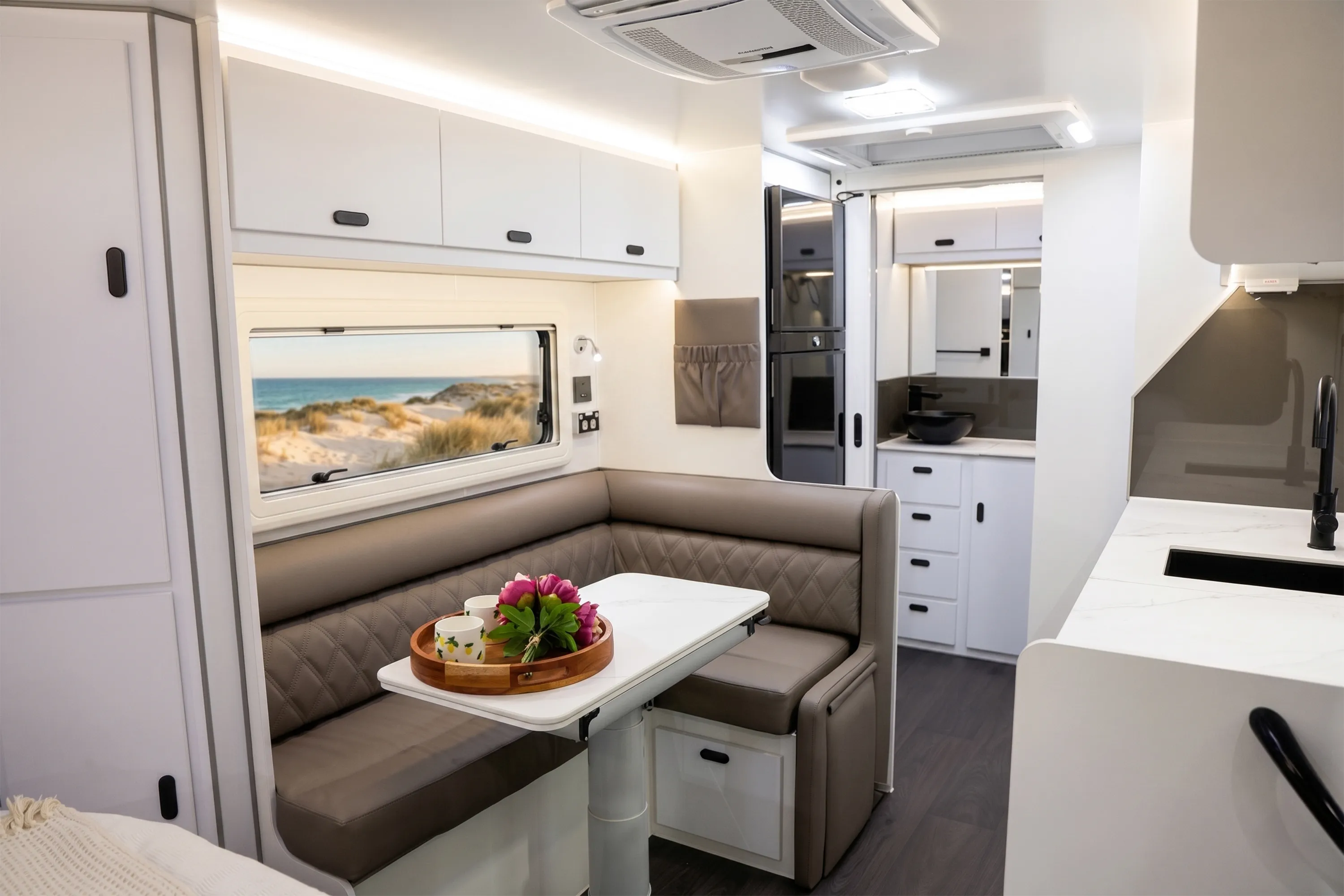
Layout choice matters more than tow vehicle or suspension in the daily experience of owning the van. The right floor plan is the one that fits how you actually travel.
The 16ft FD L Lounge is the most compact full-caravan layout in the range. Queen bed forward, L-shape lounge rear, kerbside kitchen. Built for couples who want full caravan format in the smallest possible footprint.
The 18ft 6 FD Club is the most popular Gator X layout. Queen bed forward, U-shape club lounge rear, full ensuite, internal kitchen. The trip pattern this layout serves is two-week to three-week couples touring with the occasional grandkid joining.
Family layouts come in B2 (double bunk) and B3 (triple bunk) configurations across the 17ft 10 and 18ft variants. The B2 sleeps four. The B3 sleeps six. Both work for primary-school-age kids. Buyers with teenagers usually need to step up to a Scorpion Sting for the extra single-bunk options.
For the full layout breakdown across the JB range, including how café, club lounge, family bunk, and East-West Bed configurations compare, our best caravan layouts guide covers the choice in detail.
When should you step up to a Scorpion Sting?
Step up to a Scorpion Sting when your tow vehicle is a Chevrolet Silverado, Ford F150, or Ram, when your trips are genuinely long (three months plus), or when you need a layout that the Gator X does not offer. The Scorpion range has more layouts, more water capacity, and more off-grid capability than the Gator range.
The boundary is not always obvious. A buyer with a HiLux and a two-week trip pattern is a Gator buyer. A buyer with a Silverado and a six-month lap is a Scorpion buyer. The space between is where the question gets interesting.
Three signals point toward stepping up. The first is tow vehicle: if you already have or are willing to upgrade to a heavy-duty 4WD, the Scorpion range opens up. The second is trip duration: extended remote stretches favour the Scorpion's larger water capacity and 10kW power options. The third is layout: the Scorpion range offers East-West Bed, corner shower configurations, and larger family bunk options that the Gator X does not.
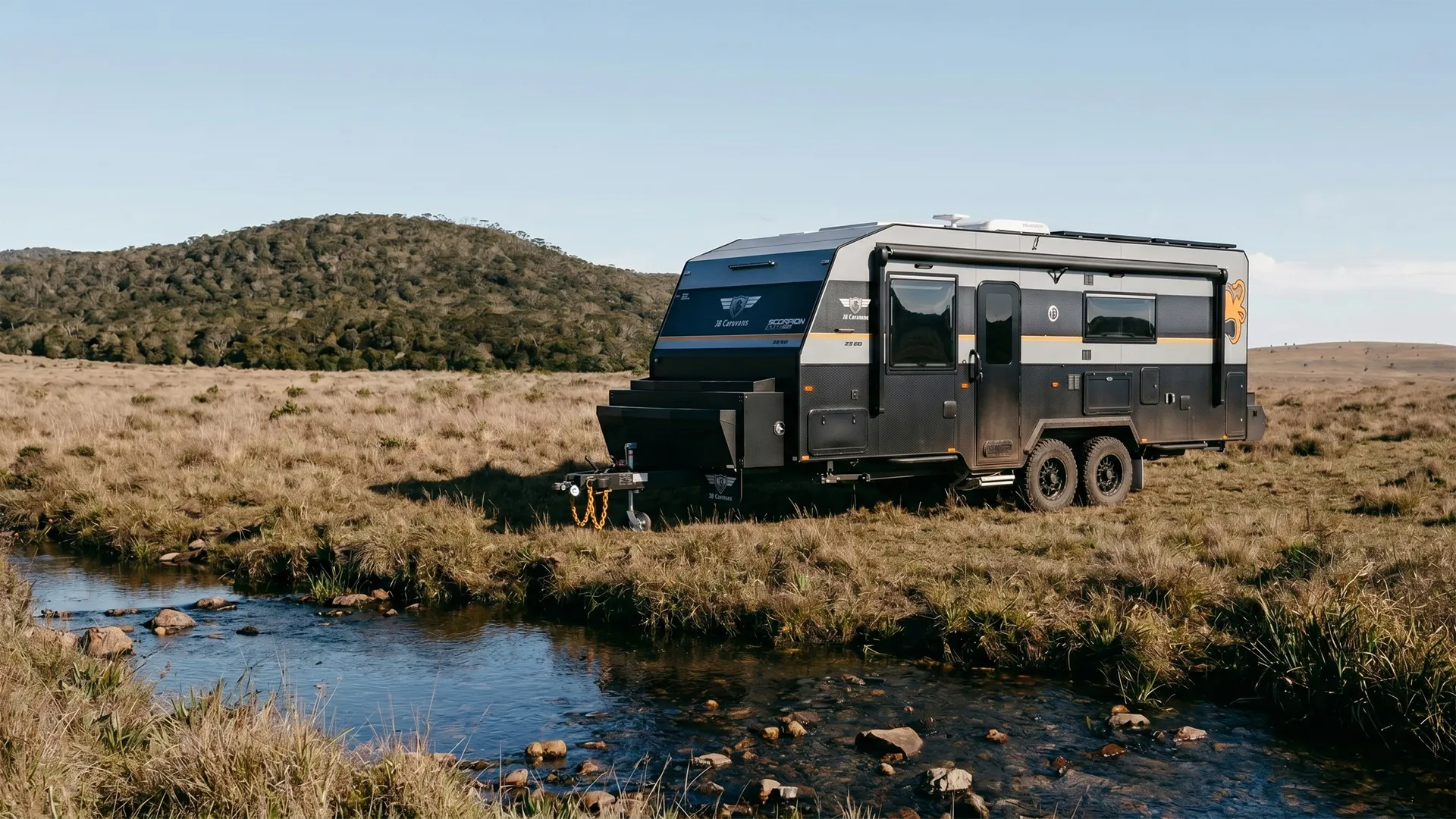
For the full Scorpion range breakdown including the Sting, Sting Air, and Sting Air EV side by side, our guide to luxury off-road caravans covers the choice in detail.
Australian made and dealer supported
Every Gator variant is built at the JB Caravans factory in Campbellfield, Victoria. Every component is sourced from a supplier with Australian distribution. Every van ships with a 5-year structural warranty and access to the national dealer network from Perth to Townsville.
Compact off-road caravans live the same hard life as full-size ones. Same chassis materials, same suspension specifications, same off-grid systems. The fact that the van is smaller does not change the engineering standard. The Gator is built to the same tolerances as the Sting Air.
The strategic case for Australian-made caravans (resale value, parts availability, ADR compliance) sits in our piece on why Australian-made caravans matter.
Ready to see the Gator range up close?
The full Gator lineup with every variant, every layout, and current pricing sits on one page. Your local JB dealer can match the right Gator to your tow vehicle and trip plan in twenty minutes.