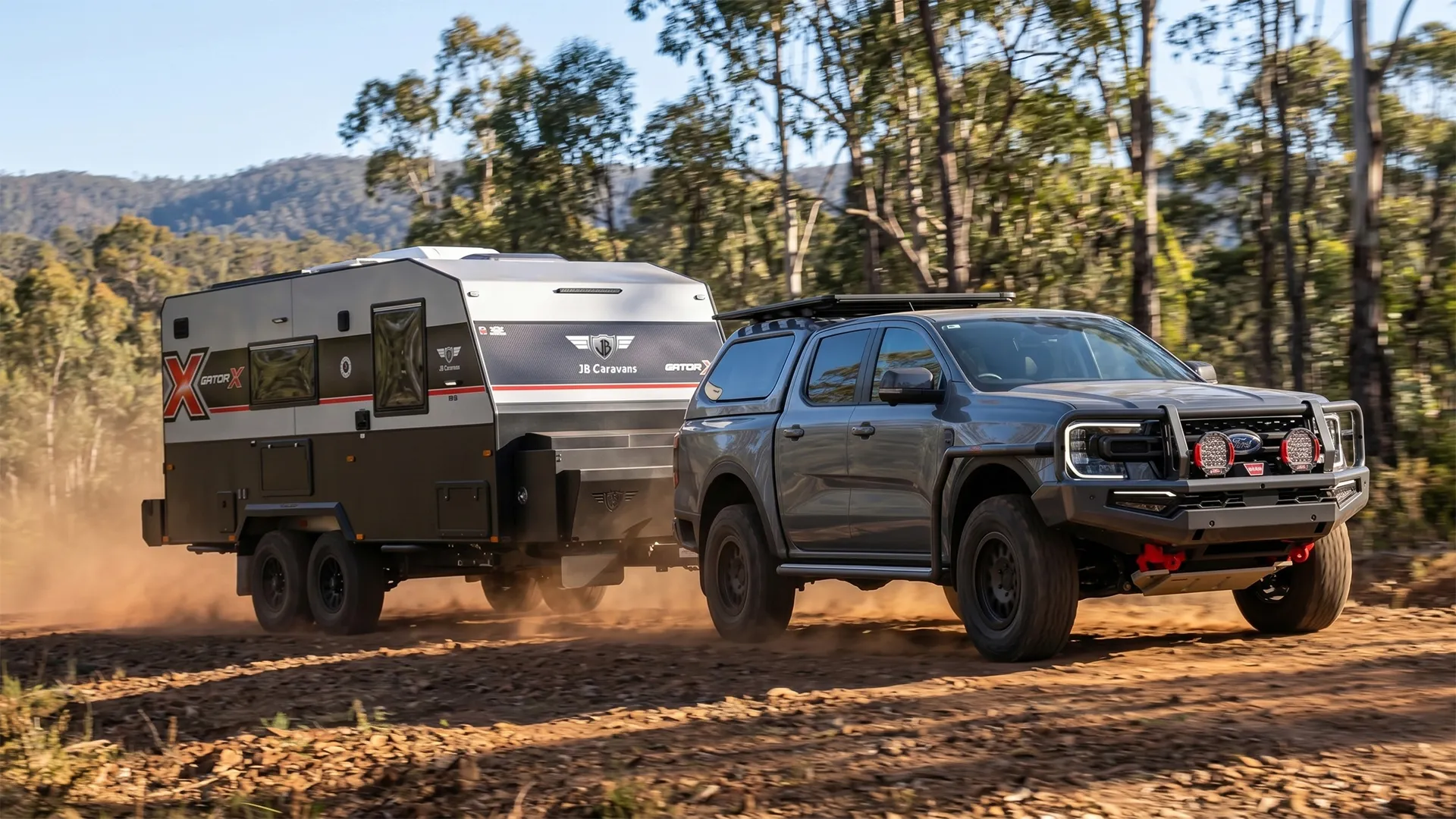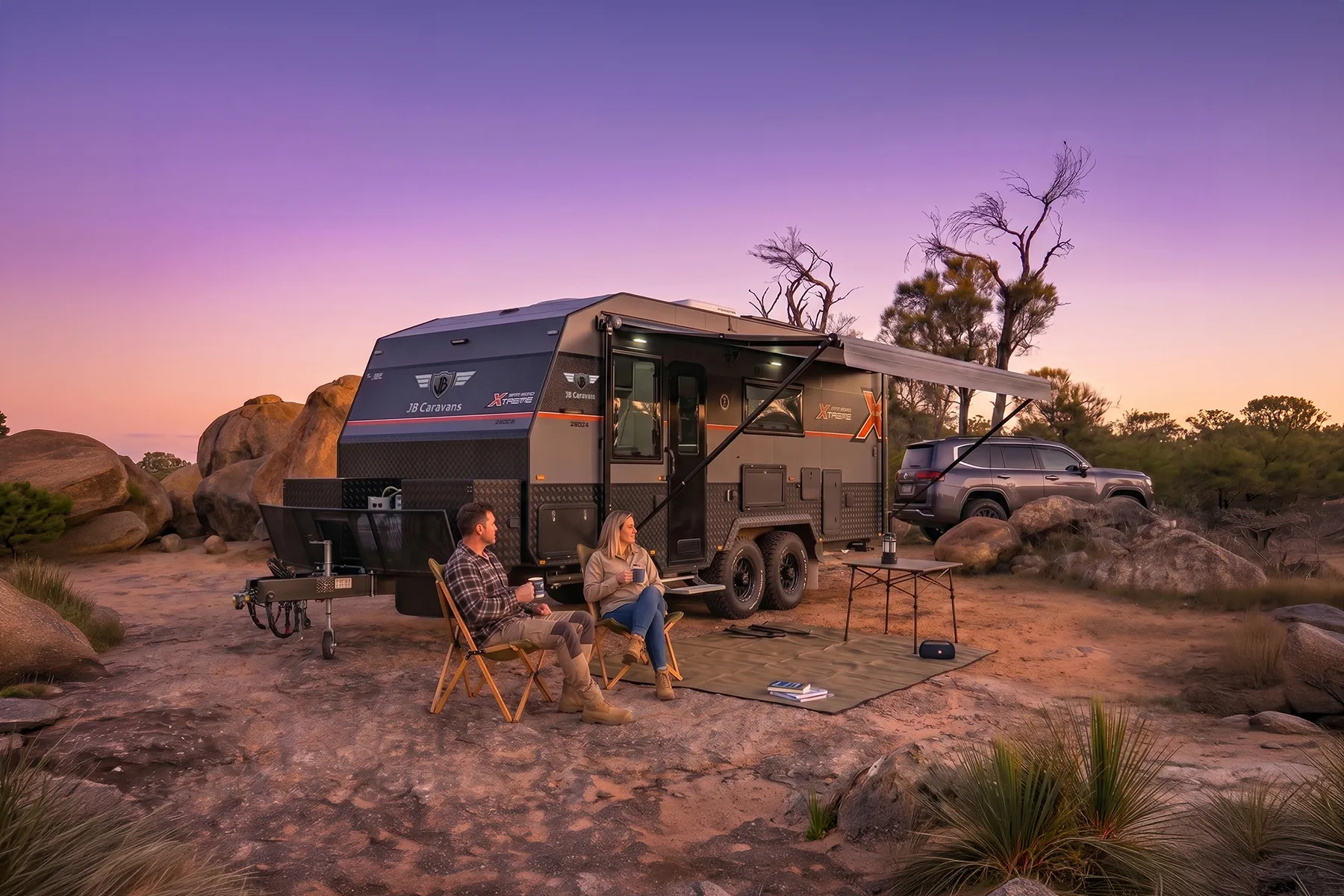
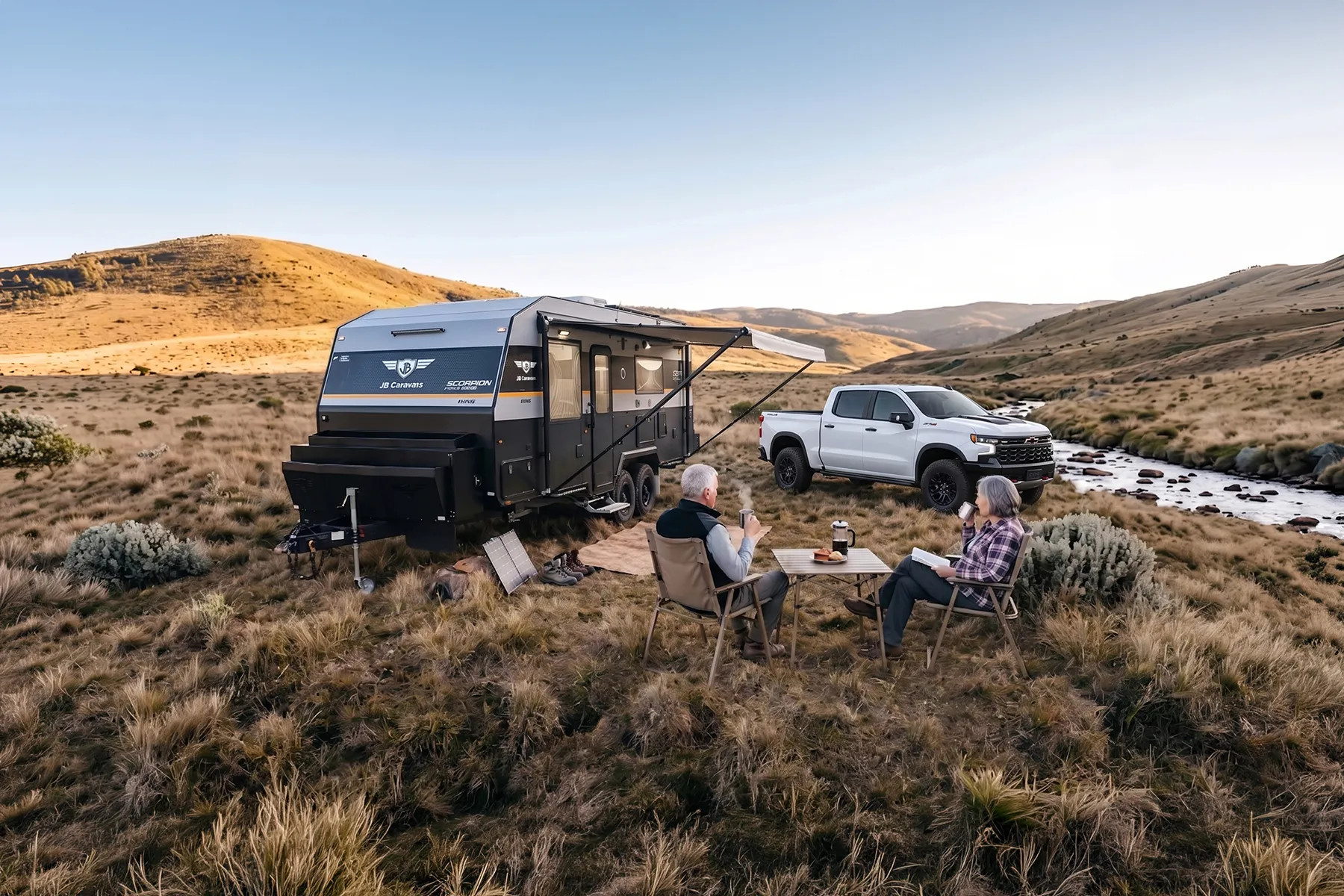
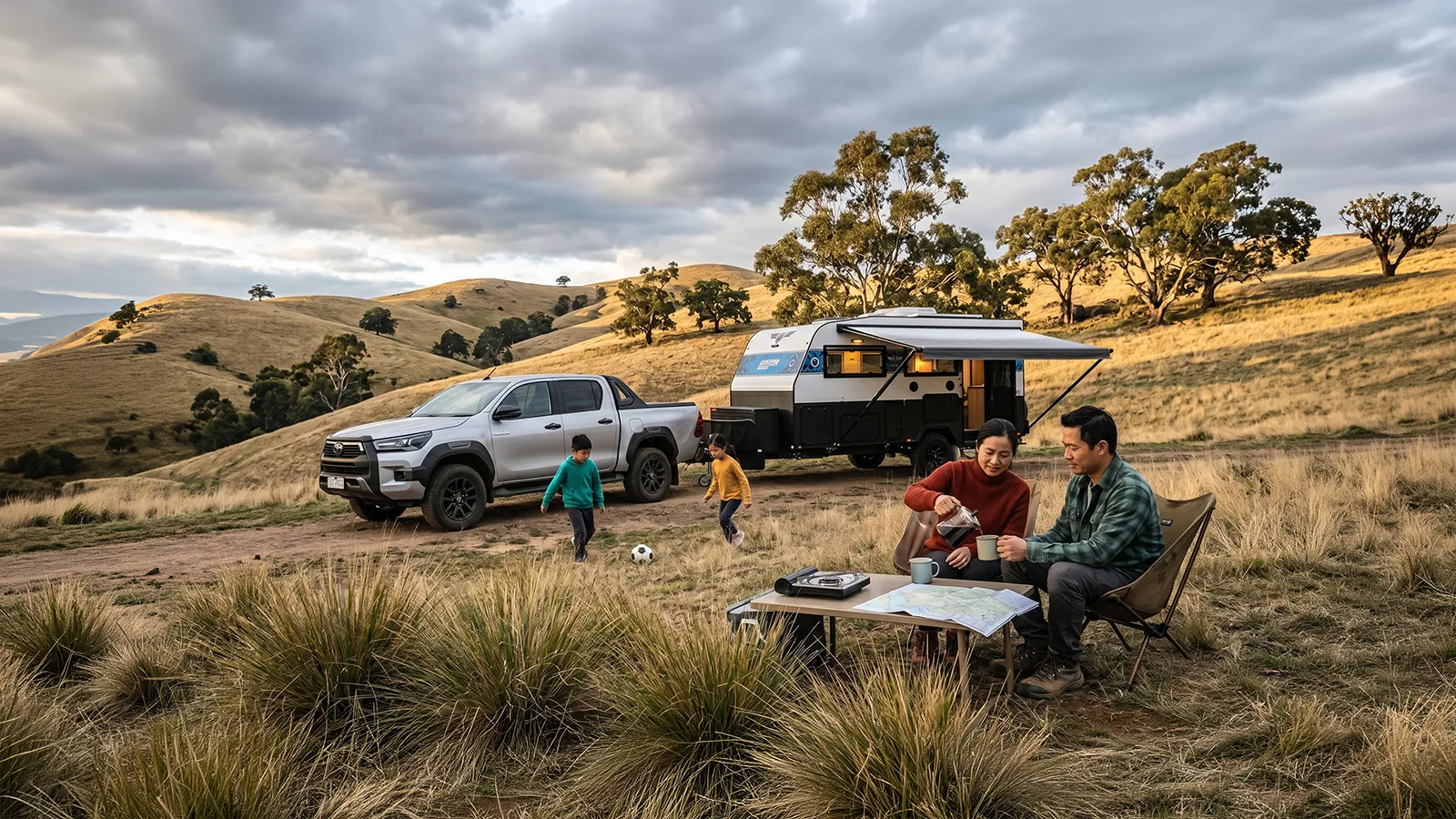
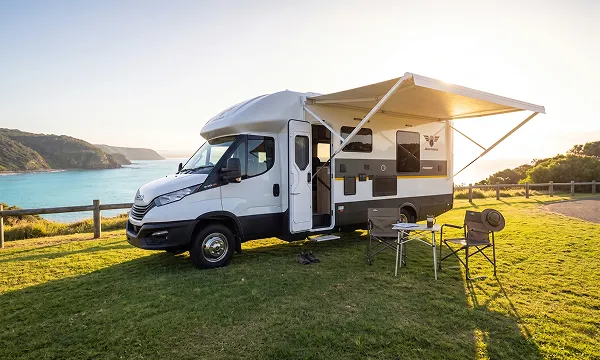
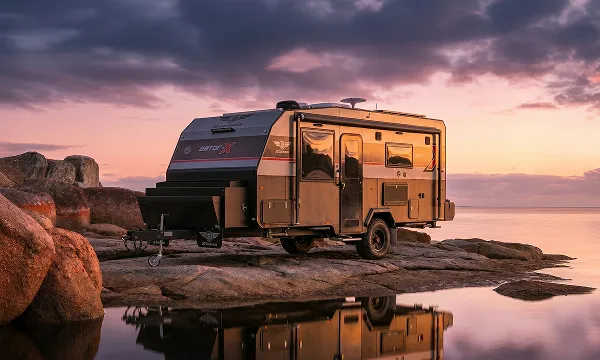
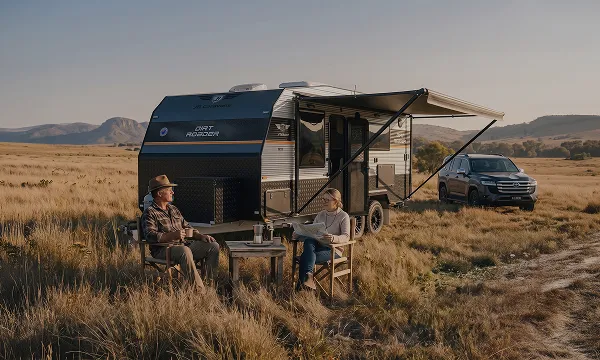
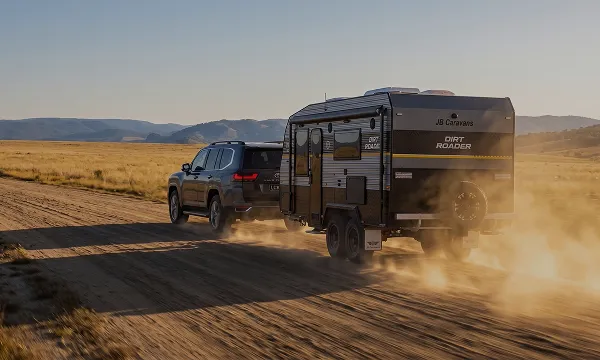
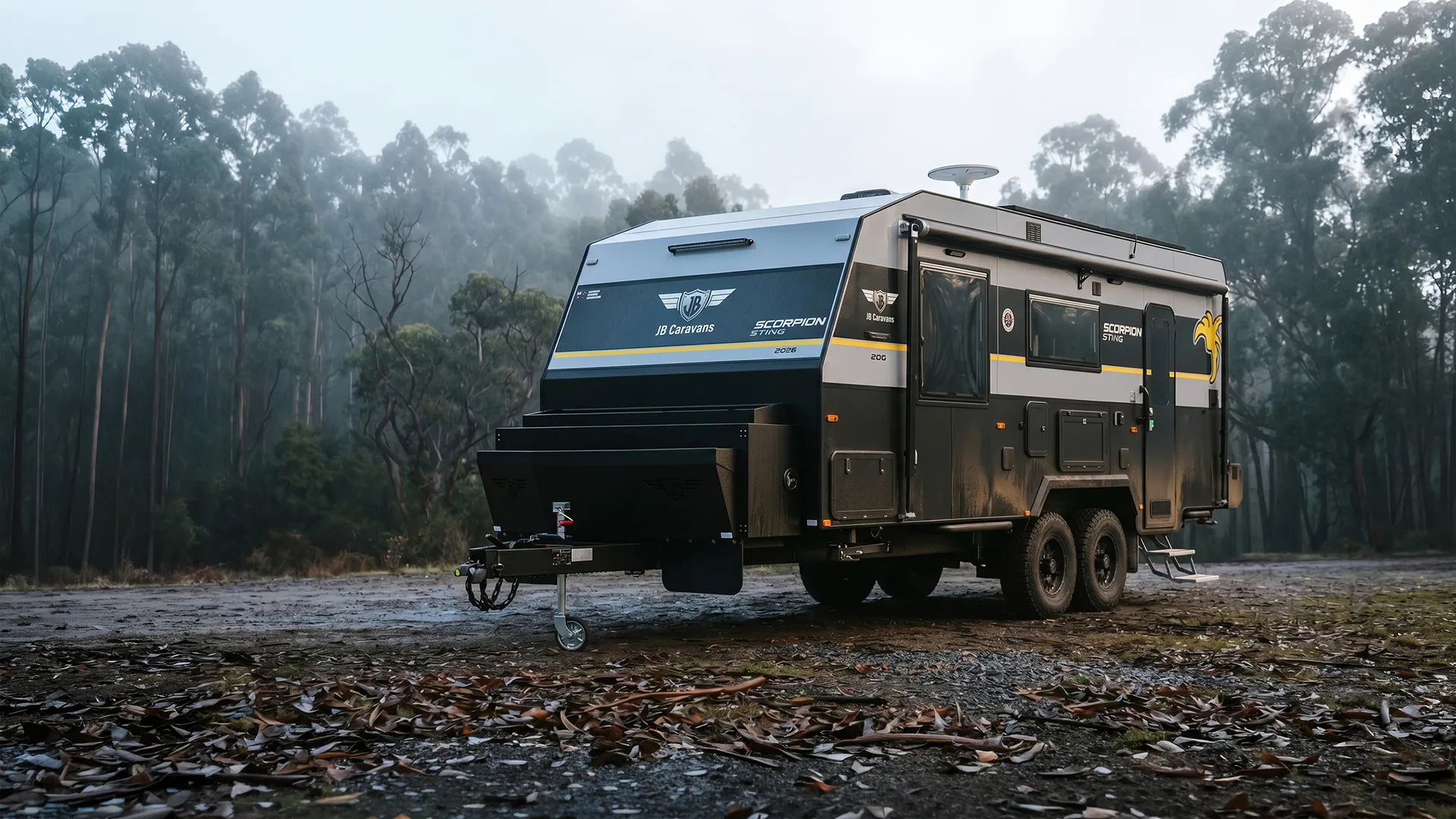

The Scorpion Sting is JB's premium off-road platform. Three variants, twenty-plus layouts, and a power and suspension package built for the trips most caravans cannot take. This guide covers what separates the Scorpion Sting from the rest of the range, how to choose between the three variants, and what a long trip in one actually feels like.
What makes the Scorpion Sting a luxury off-road caravan?
The Scorpion Sting is JB's premium full off-road platform. Heavier-duty chassis, larger water capacity, more powerful battery systems, and more layout options than any other model in the range. Built for buyers who want full off-road capability across long trips, with the build quality and dealer support to last a decade.
Luxury in this category does not mean upholstery and chrome. It means engineering that holds up where everything else stops.
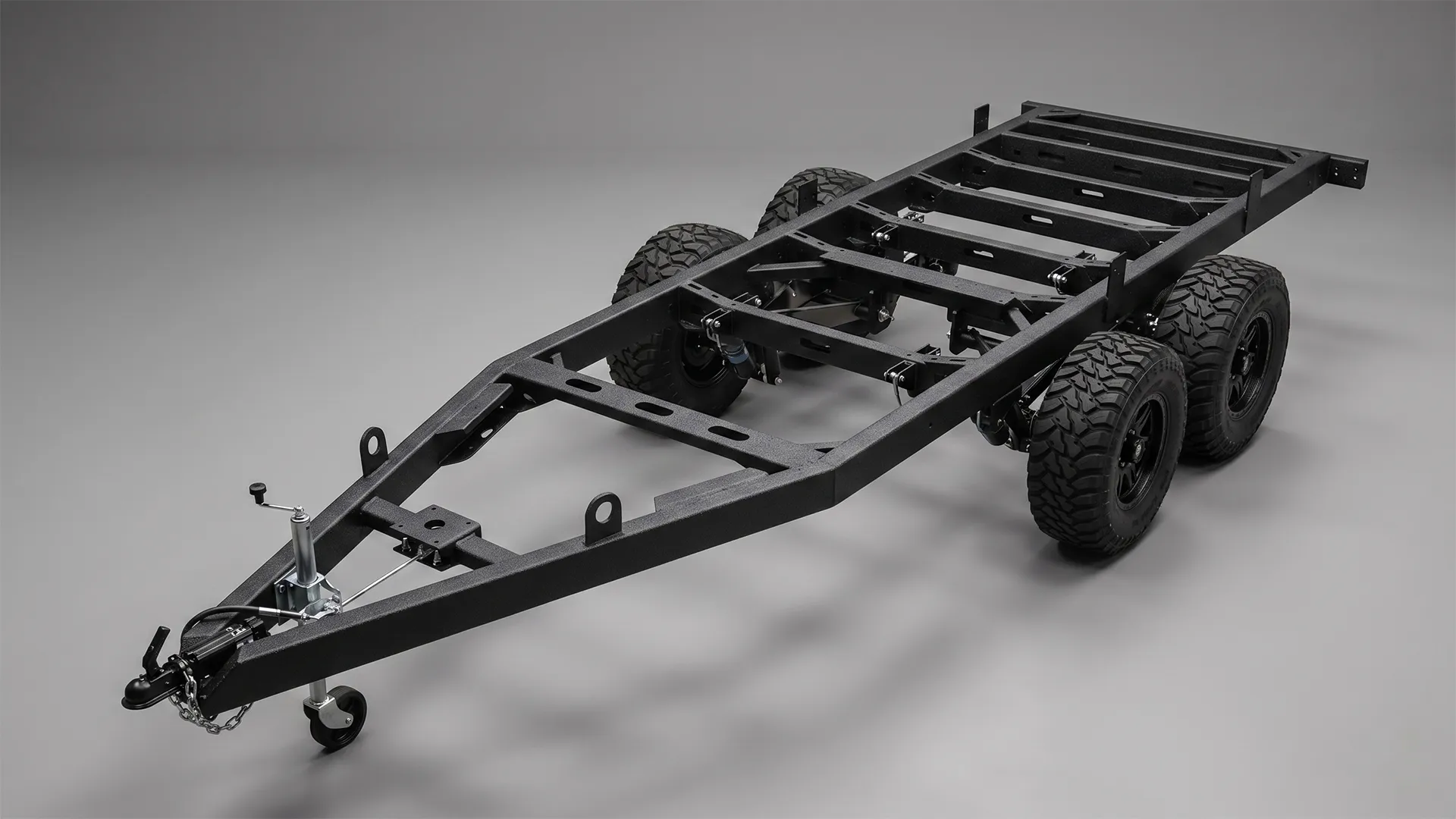
The Sting range runs a 6-inch Raptor Coat chassis, twin 110L fresh water tanks, and the most layout options of any model in the JB lineup. The Sting Air adds active-levelling suspension and a 10kW lithium system. The Sting Air EV swaps gas for induction. Three variants, one underlying platform, built for the trips that define long-term ownership.
The three Scorpion Sting models
The Scorpion Sting is the entry point with passive ATX Coil suspension and a 5kW lithium system, from $143,000. The Scorpion Sting Air adds active-levelling suspension and a 10kW system, from $173,000. The Scorpion Sting Air EV runs the same hardware as the Air but removes gas entirely, also from $173,000.
Each variant suits a different buyer profile. The full Scorpion Sting range sits on one page with current pricing, but the differences are easier to understand model by model.
Scorpion Sting (from $143,000)
The Scorpion Sting is the honest entry into the premium range. Cruisemaster ATX Coil 4.5T suspension (passive, not active), EcoFlow 5kW lithium with 800W of solar, 20 layouts, ATMs from 3,500kg to 4,500kg. The Scorpion footprint without the active levelling or the 10kW system.
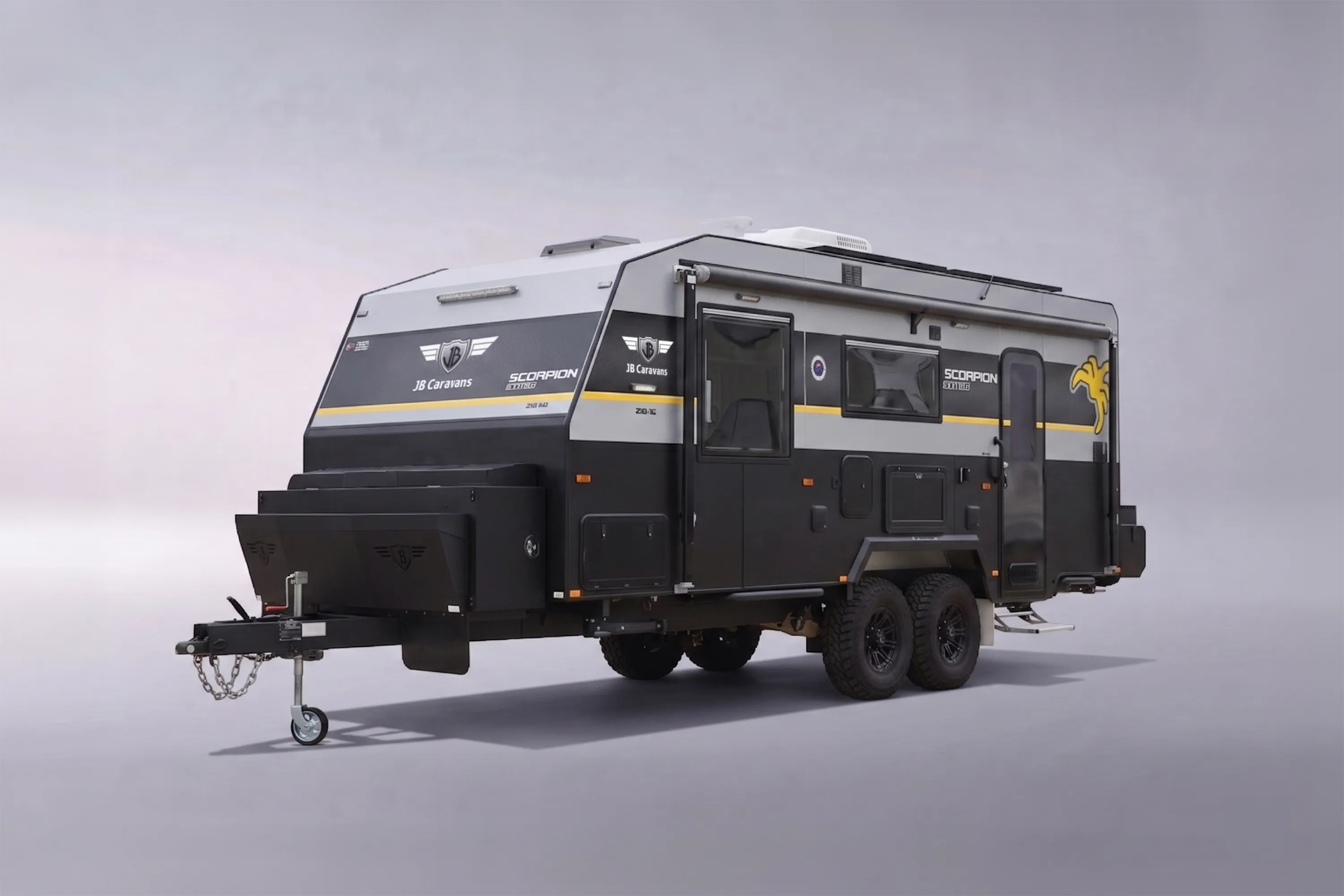
The Sting is the model buyers underestimate. It has the same chassis, the same body, the same layout language, and the same dealer support as the Sting Air. What it lacks is the active-levelling suspension and the bigger battery system. Roughly $30,000 below the Air.
Passive coil suspension is a different value proposition. No airbags, no compressor, no electronic levelling. Fewer components, fewer failure points, simpler service intervals. Owners who plan to keep the van for fifteen years often prefer this over the Air, on the basis that less complex hardware ages better.
5kW EcoFlow lithium with 800W of solar handles three to four nights off-grid as the norm. That suits buyers who travel a mix of caravan parks and free camping, with the occasional remote stretch. Buyers planning five-plus nights off-grid as the norm should step up to the Air.
For the full Scorpion Sting layout list and current pricing, browse the Scorpion Sting model page.
Scorpion Sting Air (from $173,000)
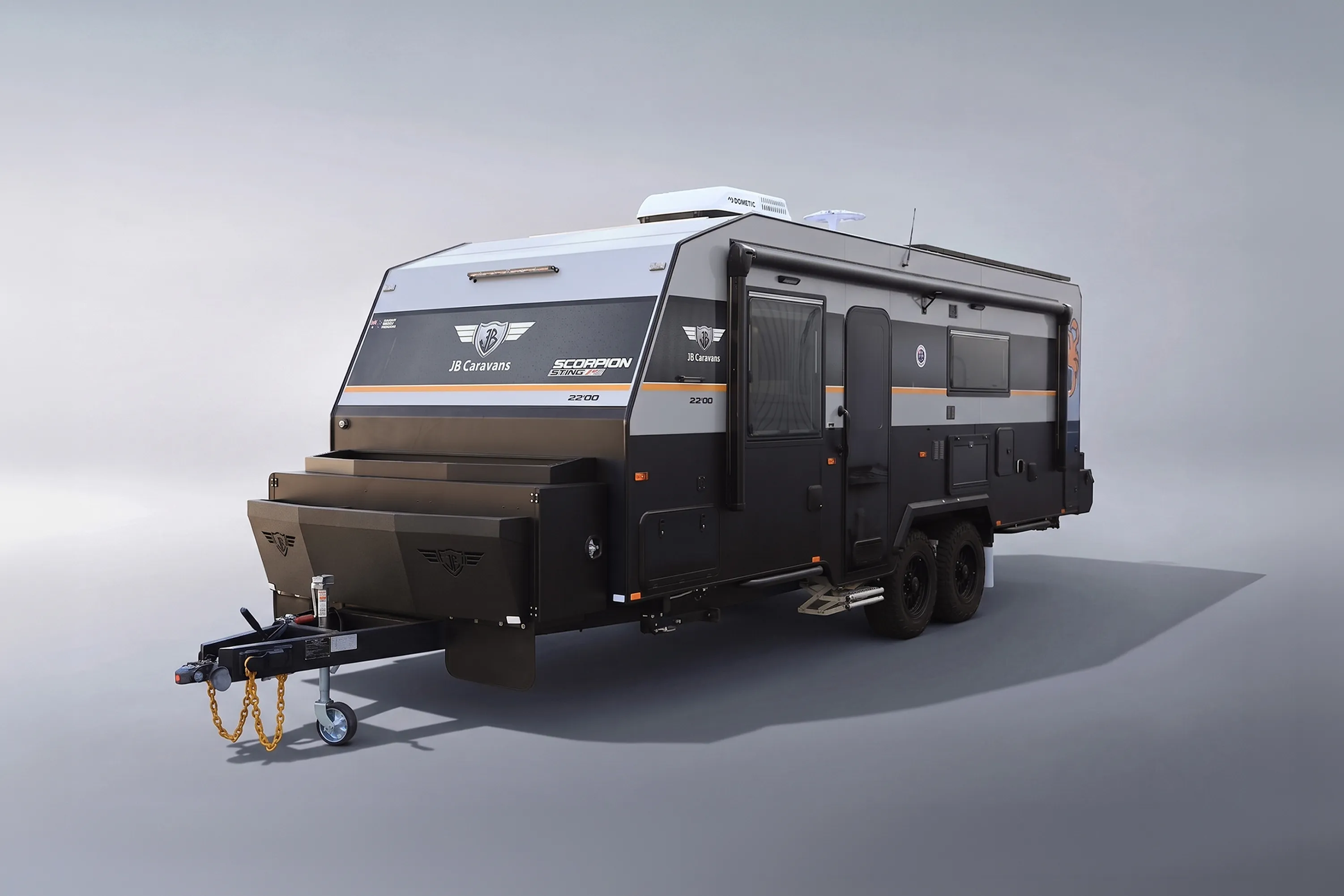
The Scorpion Sting Air is JB's flagship. Cruisemaster ATX Airbag BCS active-levelling suspension with Bosch ABS, EcoFlow 10kW lithium with 1,000W of solar, electric awning, Dometic slideout kitchen, composting toilet, and 22 layouts. Built for the long lap.
The Air is built for the trip pattern most JB buyers describe as the big one. Three months minimum. Australian circumnavigation. Two or three remote stretches across the trip, with weeks rather than days at the most isolated stops.
Active-levelling suspension reads the road and adjusts the airbags in real time. The difference is felt most on sustained corrugations, where the experience shifts from tolerable to comfortable. On the Tanami at the end of a 600km day, that difference is the trip.
The 10kW EcoFlow system handles five to seven nights off-grid as the norm. The composting toilet removes black water dump-point planning entirely. The slideout kitchen sets up in seconds. Each detail compounds across a long trip. Forty saved minutes per stop becomes a saved day per fortnight.
For full layouts and pricing, browse the Scorpion Sting Air model page.
Scorpion Sting Air EV (from $173,000)
The Scorpion Sting Air EV is the gas-free variant of the Sting Air. Same chassis, same suspension, same 10kW lithium system. Replaces gas cooking with induction, gas hot water with electric, and adds an electric slideout BBQ and a BlackJack electric jockey wheel. Sits at the same sticker as the Sting Air.
The EV variant is not a niche product. It is the answer for buyers who want to remove gas from the towing equation. Every gas bottle is a logistics problem you did not have to bring. Every gas refill is an afternoon of an Australian small town's opening hours.
Induction cooking is faster than gas, more thermally efficient, and removes the regulator-and-compliance routine at caravan parks. Electric hot water removes the gas hot water service entirely. The electric slideout BBQ replaces the external gas BBQ and runs from the same 10kW system.
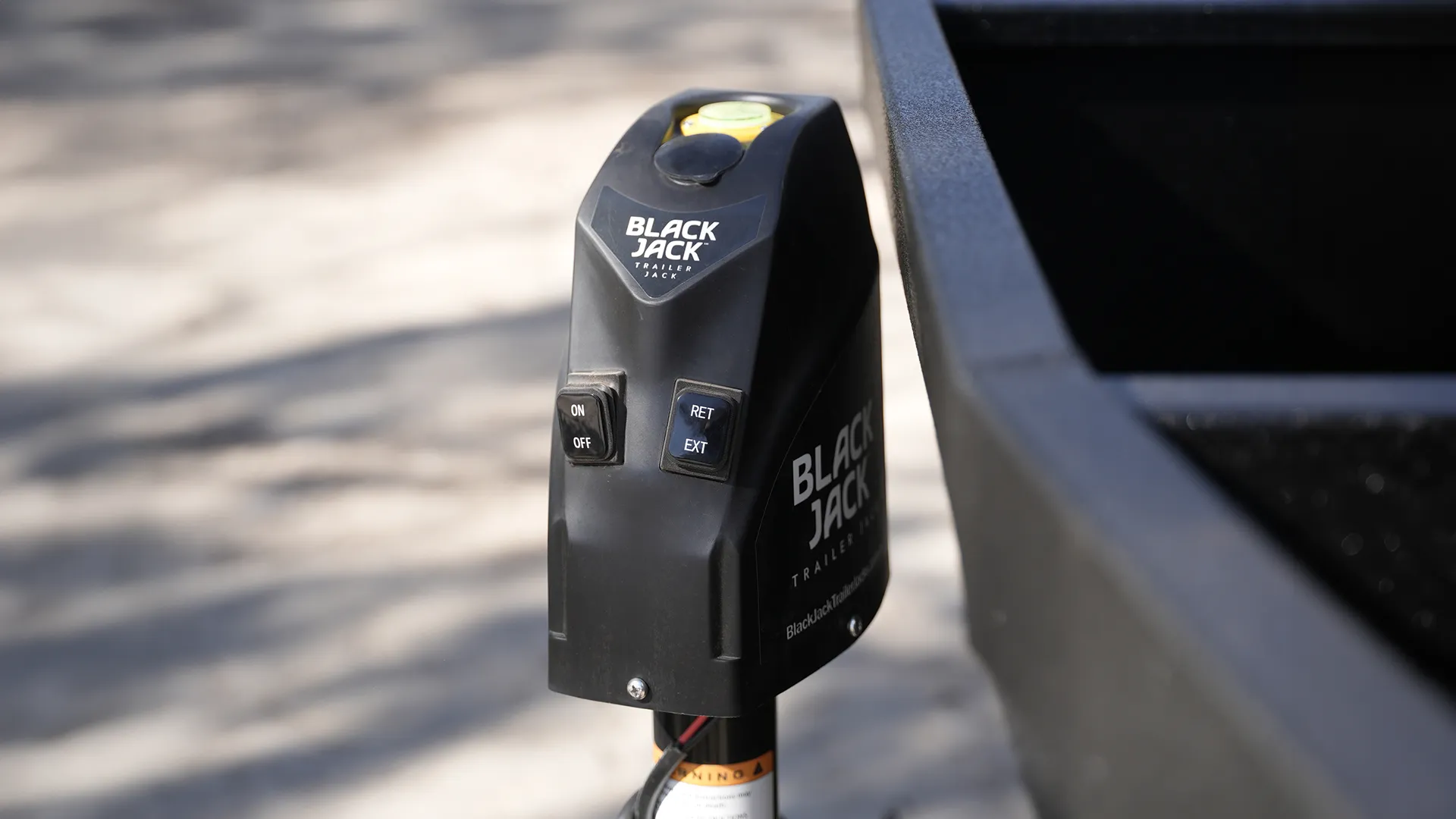
The BlackJack electric jockey wheel raises and lowers the van under its own power. Solo hitching is no longer a physical task. The EV variant ships with this as standard. Buyers who hitch alone treat it as essential.
For full layouts and pricing, browse the Scorpion Sting Air EV model page.
How to choose your Scorpion Sting
Choose the Scorpion Sting if you want premium build quality and full off-road capability without the active-levelling suspension or the 10kW power system. Choose the Sting Air if your trip plan is genuinely long. Choose the Sting Air EV if you tow with an electric or hybrid vehicle, or if removing gas matters to you.
Three questions get most buyers to the right model.
The first is trip duration. Two-week to three-week trips suit the Sting and its 5kW power system. Three-month laps suit the Sting Air and its 10kW system. The Sting Air EV suits either trip length, with the energy-system question already answered by the buyer's tow vehicle.
The second is suspension preference. Active-levelling is a meaningful upgrade on sustained corrugations, where the Sting Air earns its premium. Passive coil is the better choice for buyers who prefer simpler systems and lower service complexity over fifteen-plus years of ownership.
The third is what you tow with. The Sting and Sting Air require heavy-duty 4WDs, typically 200 Series, 300 Series, Patrol, or Ram. The EV variant adds compatibility with electric tow vehicles and removes the gas-bottle compliance from the towing equation.
What suspension does the Scorpion Sting range use?
The Scorpion Sting runs Cruisemaster ATX Coil 4.5T, a passive coil-spring tandem-axle system rated to 4,500kg. The Scorpion Sting Air and Sting Air EV both run Cruisemaster ATX Airbag 4.5T BCS, active-levelling suspension with Bosch ABS control. Both systems share the 6-inch Duragal chassis and the same off-road geometry.
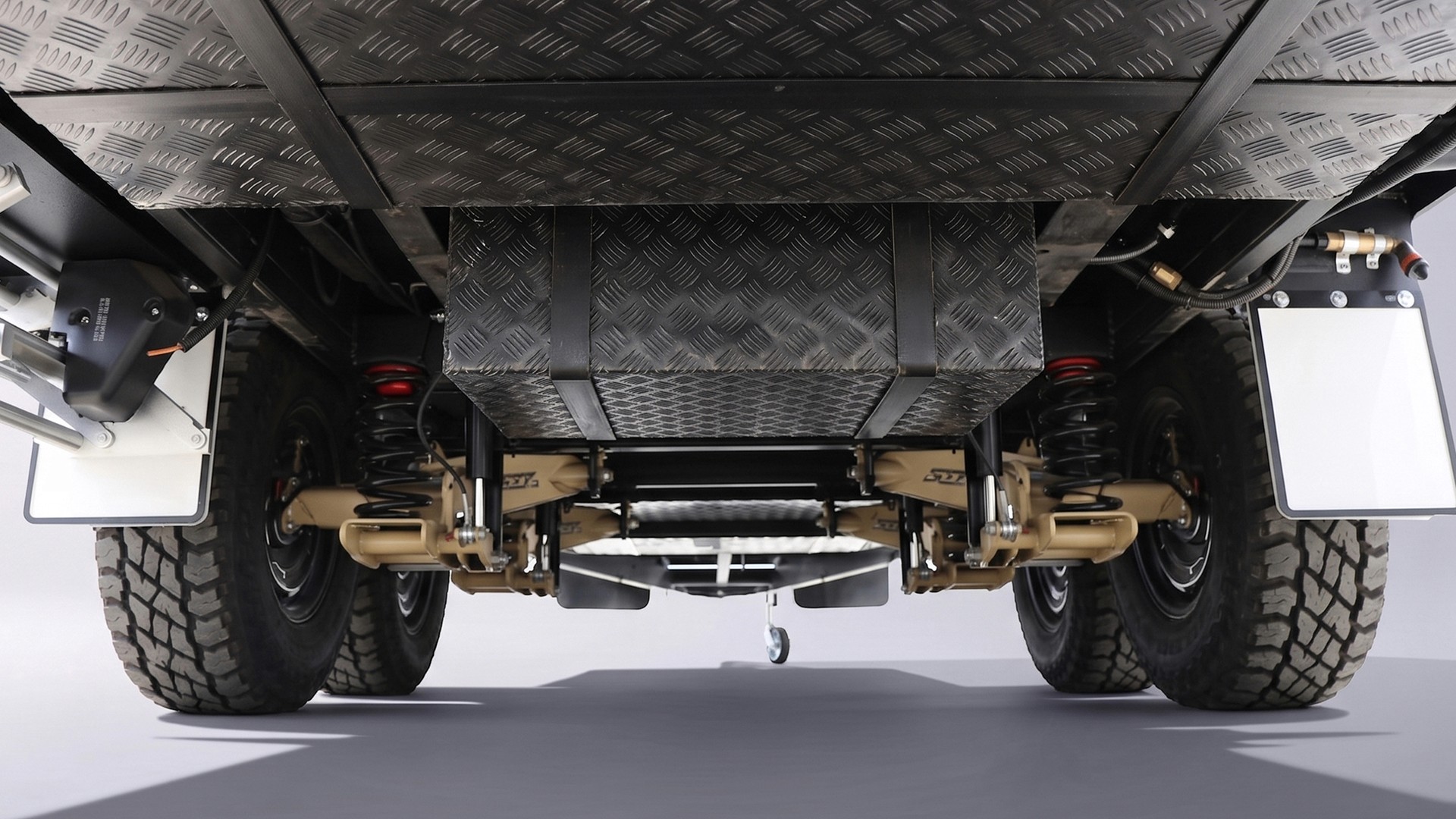
The choice between passive and active is more nuanced than the price difference suggests.
ATX Coil is the workhorse. Proven, simple, designed to take sustained corrugations with twin shock absorbers per wheel. No compressor, no electronic levelling, no failure points that need diagnostic equipment to repair. The boundary of what a passive system can do, expressed cleanly.
ATX Airbag is an Airbag levelling system. Adjusts the airbag pressure in real time to make chassis level to the ground below.
What power system does the Scorpion Sting range use?
The Scorpion Sting runs an EcoFlow 5kW BMS (416Ah) with 800W of solar and a 3,600W inverter. The Sting Air and Sting Air EV run an EcoFlow 10kW BMS (833Ah) with 1,000W of solar and a 5,000VA inverter. Both systems include 3,000W AC charging, 1,000W DC-to-DC charging, and Starlink pass-through.
The 5kW system on the standard Sting handles three to four nights off-grid as the norm, including running a 216L compressor fridge, lighting, and water pumps. Air conditioning is possible but reduces the off-grid duration.
The 10kW system on the Air and Air EV handles five to seven nights off-grid as the norm. The same air conditioner runs more freely, the larger inverter handles induction cooking on the EV variant, and the 1,000W of solar offsets daily draw more aggressively.
For battery sizing logic and how to match a system to your trip pattern, our caravan battery and power guide covers the maths.
Layouts across the Scorpion Sting range
The Scorpion Sting offers 20 layouts. The Sting Air offers 22. The Sting Air EV offers 22. All three variants share the same layout language: café, club lounge, family bunks (B2 and B3), large ensuite, corner shower, and East-West Bed. The Sting Air and Air EV add layouts specific to the active-suspension and 10kW platform.
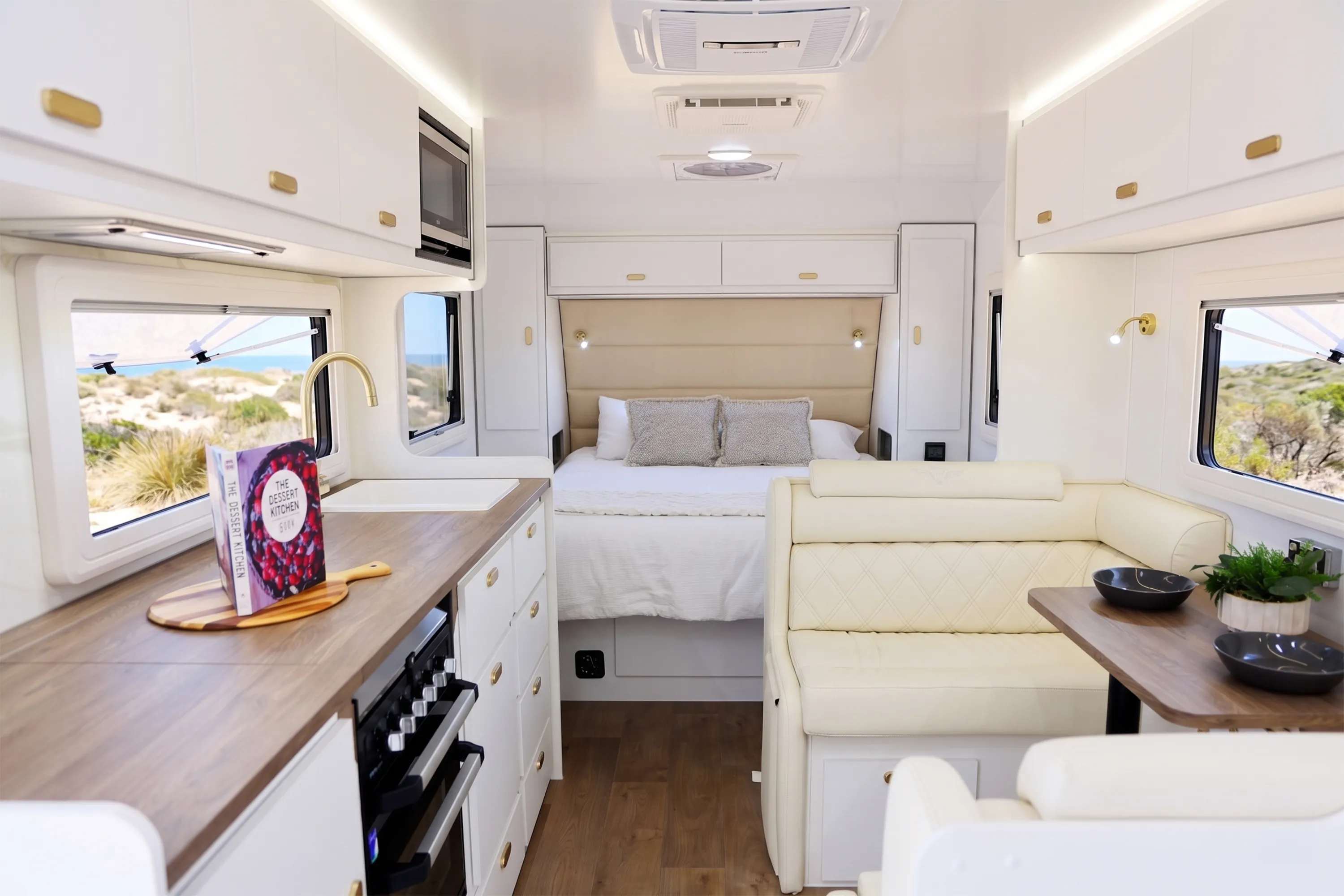
Layout selection across the Scorpion range is a decision worth taking seriously.
The 21' Rear Door Club Lounge is the most popular layout across all three variants. Queen bed forward, U-shape rear lounge, drop-down table that converts to a third sleeping zone.
The 22'6 Rear Door East-West Bed runs the bed across the width of the van with access on both sides. Couples on long trips consistently rate this as the single best layout decision they make. Available across all three Scorpion variants.
Family configurations come in B2 (double bunk) and B3 (triple bunk). The 23' Front Door Club Family B2 sleeps five with a generous club lounge, large ensuite, and standalone kitchen. The B3 variant sleeps the same five but redistributes the bunk arrangement.
For layout decisions across the JB range, our best caravan layouts guide covers café, club lounge, centre bathroom, family bunk, and East-West configurations side by side.
What is standard in every Scorpion Sting?
Every Scorpion Sting variant ships with Premium Diamond Leather upholstery, an innerspring pillowtop queen mattress, a 6-inch Duragal chassis, European double-glazed windows, a 216L compressor fridge, reverse-cycle air conditioning, and a Fusion sound system. The Sting Air adds modern stone benchtops, a slideout kitchen, and a composting toilet. The Sting Air EV adds induction cooking and an electric jockey wheel.
The standard specification on a Scorpion Sting is the answer to most "is it worth the premium" questions. Luxury in this category is the components you do not have to upgrade later.
The chassis is 6-inch Duragal hot-dipped galvanised with Raptor coating. The walls are one-piece composite with XPS insulation. The roof is one-piece composite, fully insulated. The floor is honeycomb composite. These are the materials that hold the van together across 100,000km of unsealed road.
The interior runs Premium Diamond Leather upholstery, an innerspring pillowtop queen mattress on a slatted gas-strut frame, premium vinyl flooring, soft-close drawers throughout, and a pull-out pantry on most layouts. The Sting Air adds Roman blinds and leather pelmets. Standard, not optional.
Cooking and amenity run a 216L ventless compressor fridge, a touch-control range hood, reverse-cycle air conditioning, an external shower, and 220L of fresh water across two tanks plus a dedicated 65L drinking water tank. The Sting Air swaps the cassette toilet for a composting toilet as standard. The Sting Air EV swaps gas for induction throughout.
What tow vehicle do I need for a Scorpion Sting?
All three Scorpion Sting variants need a heavy-duty 4WD. The Ford Ranger SuperDuty, Chevrolet Silverado, and Ram 1500 are the standard answers. The Sting Air and Sting Air EV at 4,500kg ATM require careful GVM calculation even with the heaviest tow vehicles. The Sting starts at 3,500kg ATM, slightly more flexible.
The number that limits you is not the tow rating on the badge. It is GVM, which includes vehicle weight, passengers, fuel, accessories, and the ball weight of the van.
A loaded Silverado can carry around 800kg of additional load before GVM limits engage. The Sting Air at 320kg ball weight uses 40% of that headroom immediately. Add a bull bar, a fridge in the back, and four passengers, and the maths gets tight.
The honest version of the tow vehicle conversation, with worked examples for each tow vehicle and each Scorpion variant, sits in our tow vehicle and GVM guide.
What does a long trip in a Scorpion Sting Air actually feel like?
A long trip in a Sting Air feels less like camping and more like inhabiting a small studio that happens to be parked somewhere new every few days. The active-levelling suspension means the van arrives at camp set up rather than recovering. The 10kW system means the fridge runs, the air conditioner runs, the induction cooks, and the panel reads 80% at 8pm.
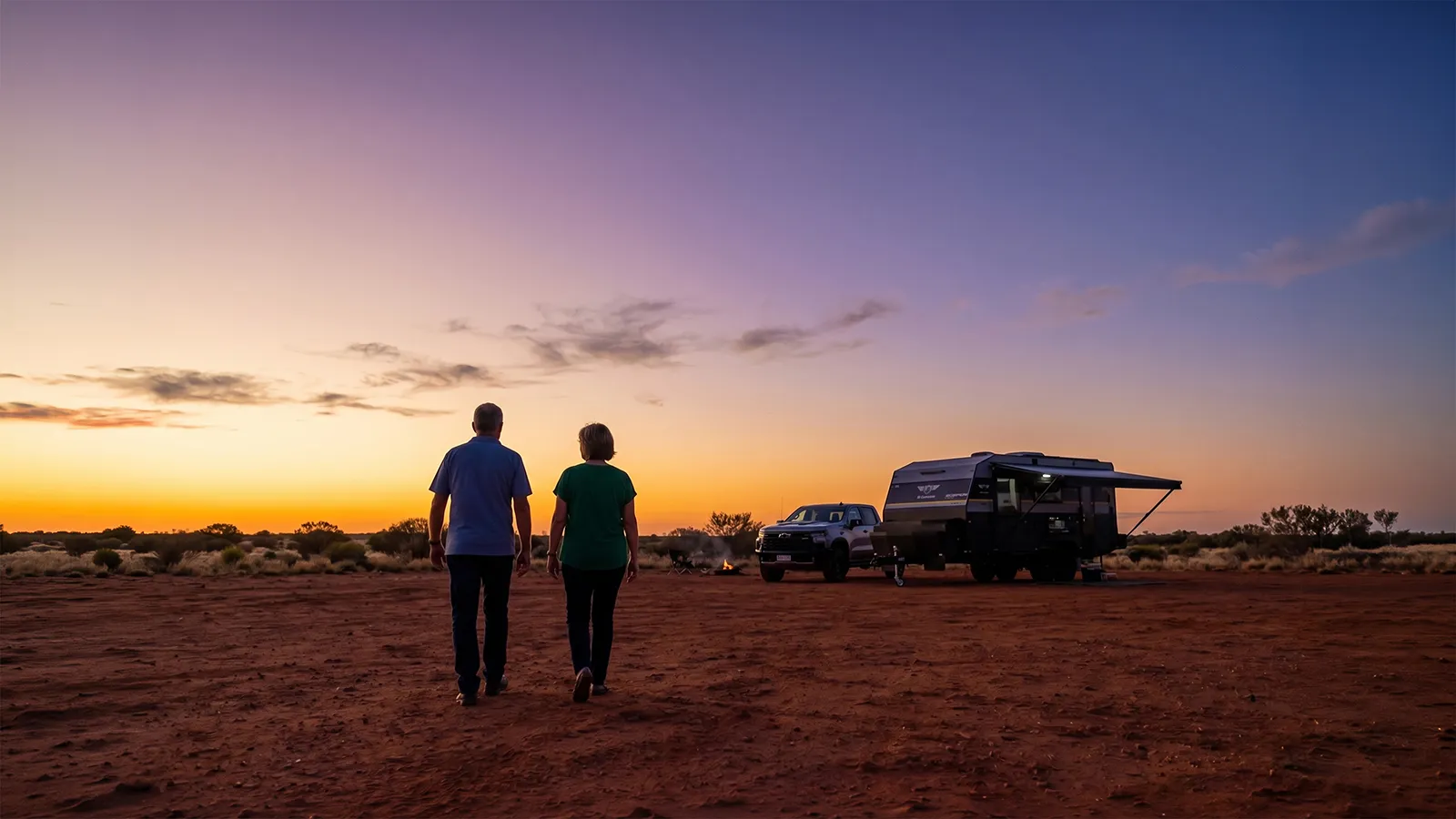
The first week is the recalibration. New buyers expect the routine of a regular caravan: hitch, level, deploy stabilisers, set up the awning, set up the kitchen, set up the toilet. The Sting Air collapses most of that into the first ten minutes. Active levelling, electric awning, slideout kitchen. The work that used to take 45 minutes takes 8.
The second week is the settle. Trips lengthen. Stops become more deliberate. The first Canning camp or first Kimberley waterhole that you stay at for three nights rather than one is the moment the van earns its premium. The 10kW system covers it without thought. The composting toilet covers it without compromise.
The fourth week is when buyers start describing it as their second home. Not because of the upholstery. Because the system that takes the friction out of daily life on the road compounds across the trip. By month three, the van is no longer a destination. It is the way you live until you decide to come home.
Australian made and dealer supported
Every Scorpion Sting variant is built at the JB Caravans factory in Campbellfield, Victoria. Every component is sourced from a supplier with Australian distribution. Every van ships with a 5-year structural warranty and access to the national dealer network from Perth to Townsville.
Premium off-road caravans live a harder life than any other category. The chassis takes more punishment, the seals see more dust, the suspension takes more cycles. When something needs attention in year five or year eight, parts availability becomes the difference between a one-week delay and a two-month delay.
This is the practical case for buying Australian made in this category. The strategic case sits in our piece on why Australian-made caravans matter, which covers resale value, ADR compliance, and the parts question in detail.
Ready to see the Scorpion Sting range up close?
The full Scorpion Sting lineup with every variant, every layout, and current pricing sits on one page. Your local JB dealer can walk through all three models with you and run the tow vehicle maths on the spot.
Browse the Scorpion Sting range Find your nearest dealer